Phrenology applied to painting and sculpture
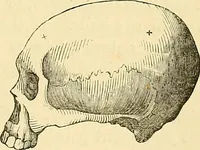
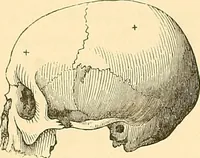
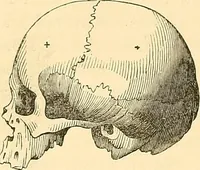
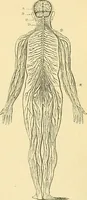
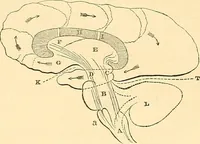
George Combe's 1855 London treatise arguing that phrenology should guide painters and sculptors, aimed at artists and the mid-century public that read skull shape as character. Wood engravings show human skulls in profile with cranial sutures and measuring marks, plus a lettered diagram of the brain in section; useful for anatomical line work and hatched modelling of bone.