The principles of mechanics : explaining and demonstrating the general laws of motion, the laws of gravity, motion of descending bodies, projectiles, mechanic powers, pendulums, centers of gravity, &c. strength and stress of timber, hydrostatics, and construction of machines : a work very necessary to be known, by all gentlemen, and others, that desire to have an insight into the works of nature and art : and extremely useful to all sorts of artificers, particularly to architects, engineers, shipwrights, millwrights, watchmakers, &c. or any that work in a mechanical way : illustrated with forty-three copper-plates
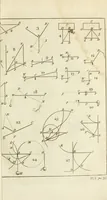
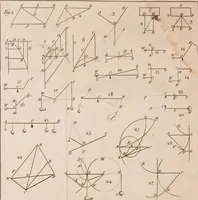
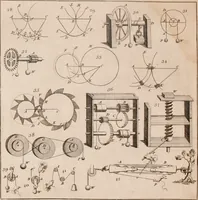
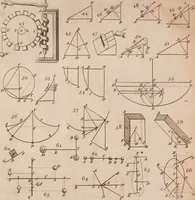
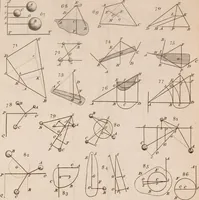
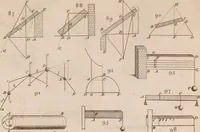
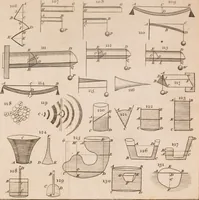
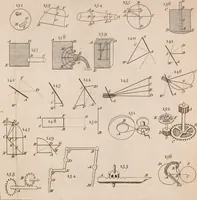
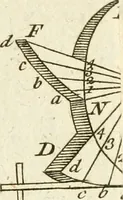
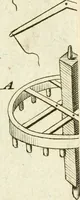
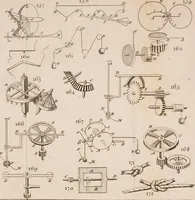
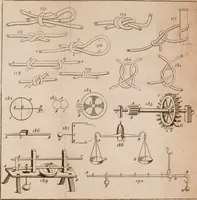
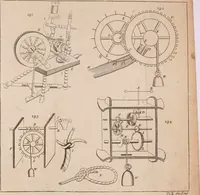
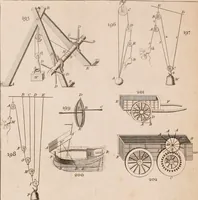
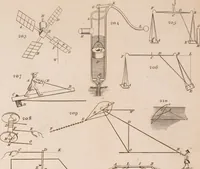
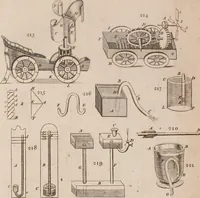
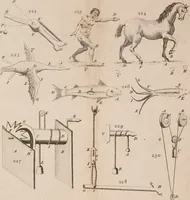
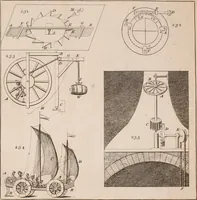
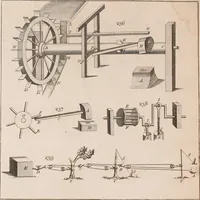
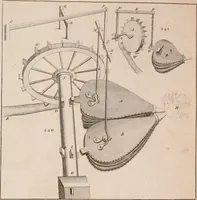
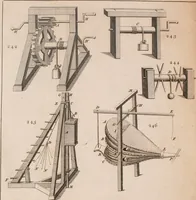
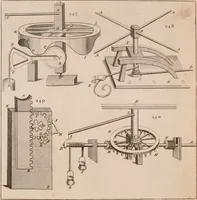
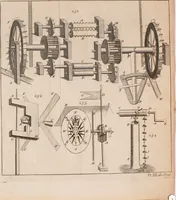
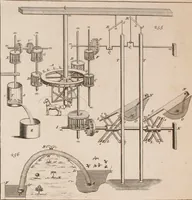
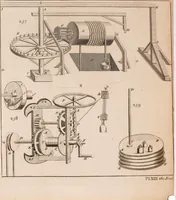
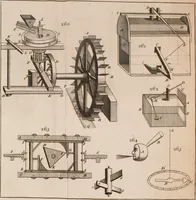
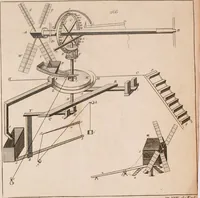
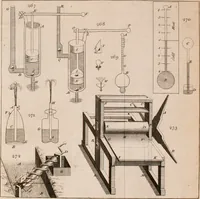
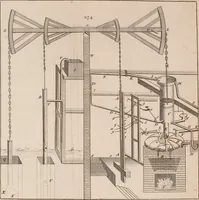
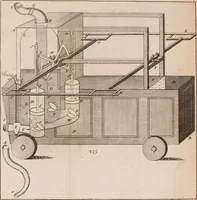
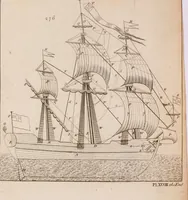
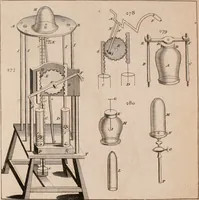
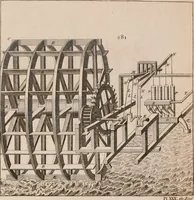
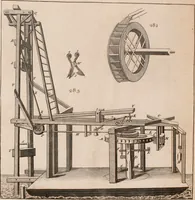
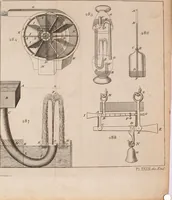
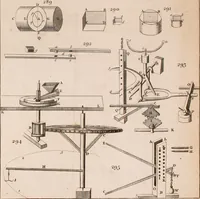
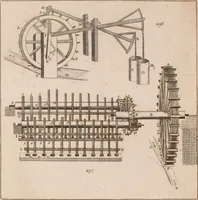
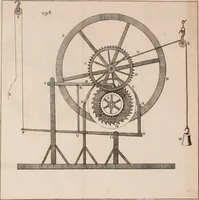
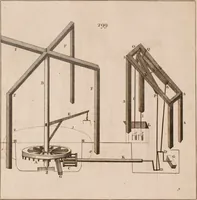
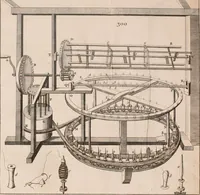
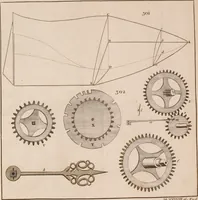
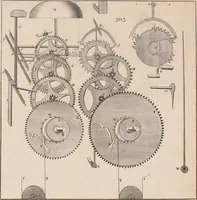
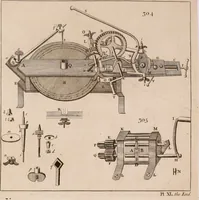
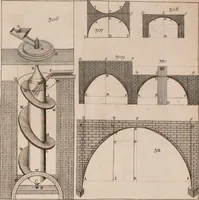
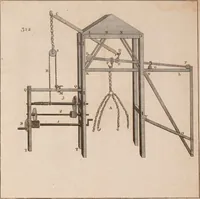
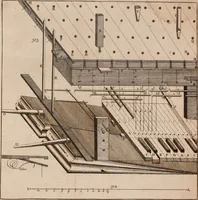
William Emerson's textbook of mechanics, issued in London in 1773 for gentlemen readers and working artificers — architects, engineers, shipwrights, millwrights, watchmakers. The forty-three copper-plates group numbered figures on a single page: water wheels, gear trains, windlasses, cranes, weight-and-pulley rigs and geometric force diagrams, drawn in thin engraved line with letter keys, usable as ready-made diagram vocabulary or plate-grid layouts.