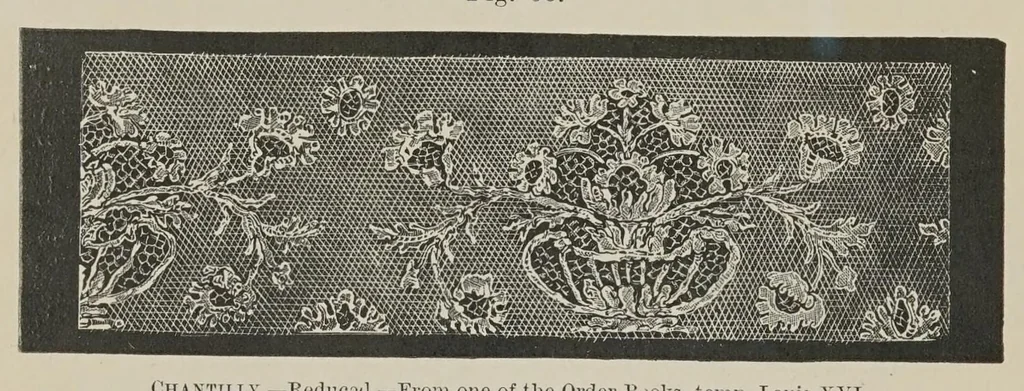
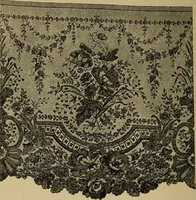
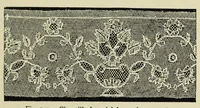
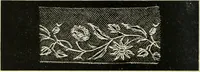
ng considered a Royal fabric, and its productions made for the nobility alone, its unfortu- nate lace-workers became the victims of revolutionary fury, and all perished, with their patrons, on the scaffold. We hear no more of the manufacture until the Empire, a period during which Chantilly enjoyed… … the black, especially, to Spain and her American colonies: no other manufactories could produce mantillas, scarfs, and other large pieces of such great beauty. It was then they made those rich large-patterned blondes called by the French “blondes mates,” by the Spaniards “ trapeada,” the prevailing…
Lace and lace making -- History
Internet Archive · Vancouver Public Library · Public domain (published before 1931). Free to use for anything.