A Dictionary of science, literature, and art [electronic resource]: comprising the history, description, and scientific principles of every branch of human knowledge; with the derivation and definition of all the terms in general use (1844)
Brande, William Thomas, 1788-1866, Cauvin, Joseph · New York : Harper & brothers · leaf 1239
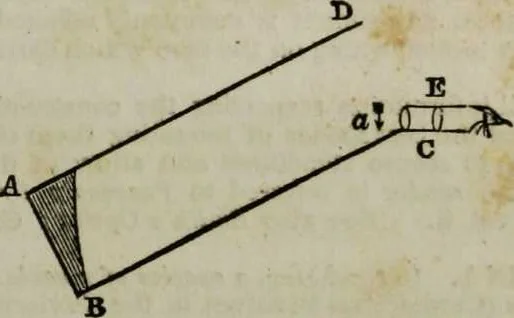
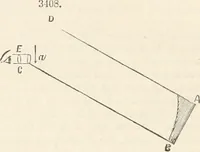
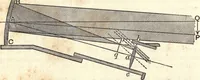
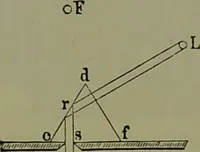
on of the image is not corrected,and for this reason probably it has not been much used. In the two last constructions the small mirror d is ad-justed by means of a rod turning on a shoulder near theeye end of the tube, and connected by a screw with theapparatus which carries the arm c, to which… … position, so as to bring the focal image a near the edge ofthe tube, where it is viewed directly by the eye-piece Ewithout interfering with the light entering the telescopefrom the object observed. The magnifying power is thesame as in the Newtonian. The reflecting telescope was invented by James…
Humanities · Medicine · Science · Literature · Arts · Encyclopedias and dictionaries
Internet Archive · Medical Heritage Library · Public Domain Mark 1.0. Free to use for anything.