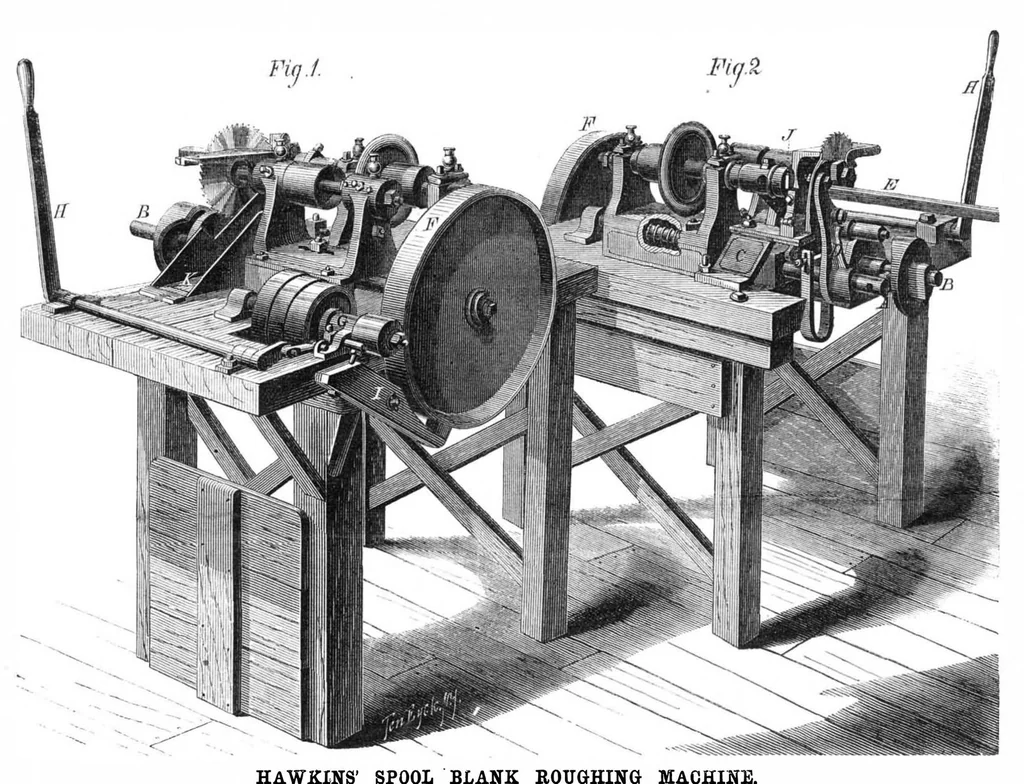
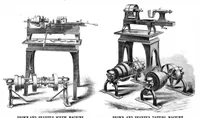
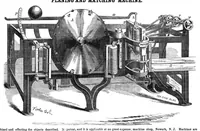
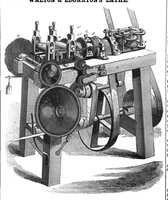
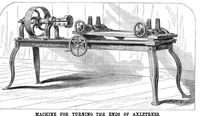
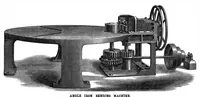
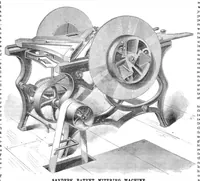
gher: namely, tha reciprocating shaft, ing an 8-inch saw by it can easily cut off 23-inch stuff. saw atthe ends. Among the advantages claimed for it are: A, the rotating shaft, B, and the standard, C, with their va- The table on the top is hinged, and is raised by means of a rious attachments.… … cut perfectly square. during a portion of Grooving is done by the revolution of B, using a wabbling saw. from the end—say, one quarter inch—and also of making per- and of the second to rotate the shaft, A,and to press back and No belt being required in this machine. one cause of ex- fect work from…
Internet Archive · Public domain (published before 1931). Free to use for anything.