American telegraphy and encyclopedia of the telegraph; systems, apparatus, operation (1909)
Maver, William, jr. [from old catalog] · New York, Maver publishing company · leaf 26
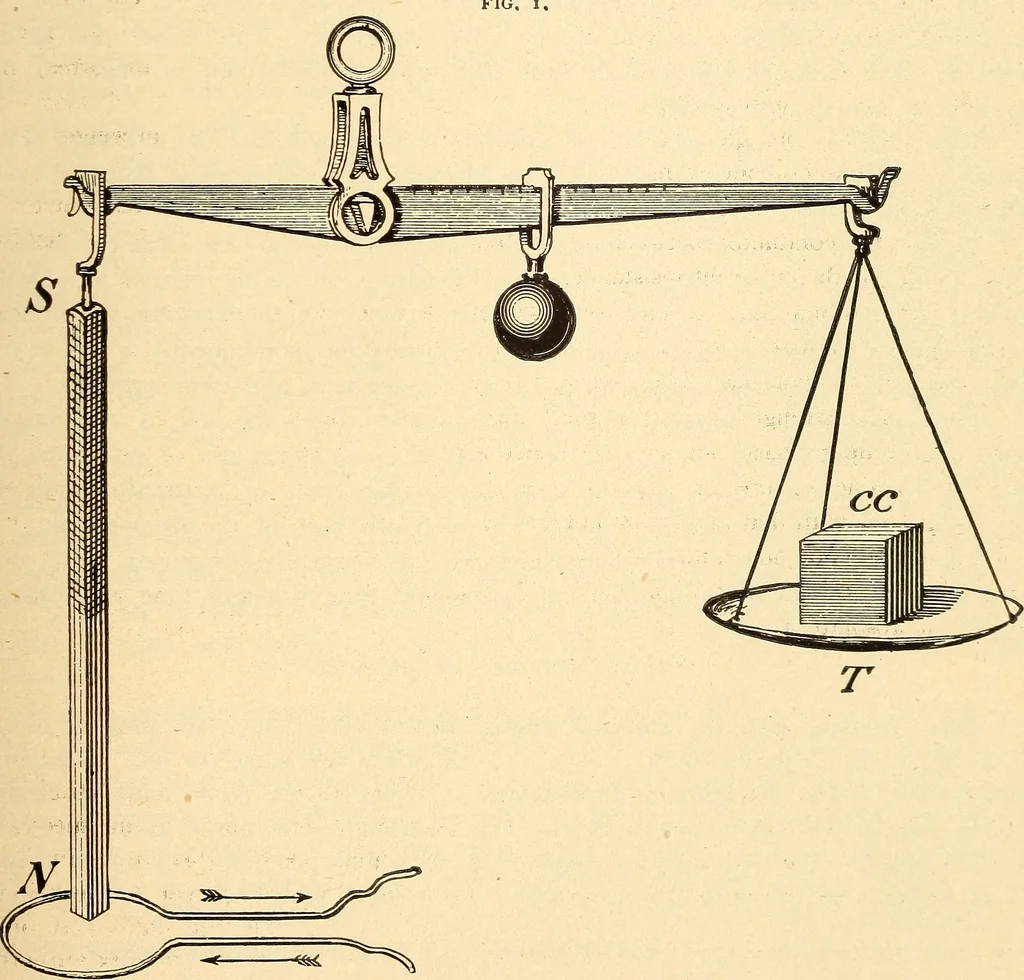
of a cubic centimetre of water at its pointof greatest density, namely, at 39.2^f. The second is equal to the time taken by apendulum, beating at the rate of 86,400 beats per day, to make one beat. The unit of force is termed the dyne. The dyne is equal to that force which is re-quired to… … elsewhere, [see Chapter III,) that, when a current exists in a wire the neighbor-hood of that wire becomes magnetic, and the strength of the magnetism thus developeddepends upon and varies with the strength of current in the wire. The magnetism thus 8 AMERICAN TELEGRAPHY. manifested attracts or…
Telegraph
Internet Archive · Library of Congress · Public Domain Mark 1.0. Free to use for anything.