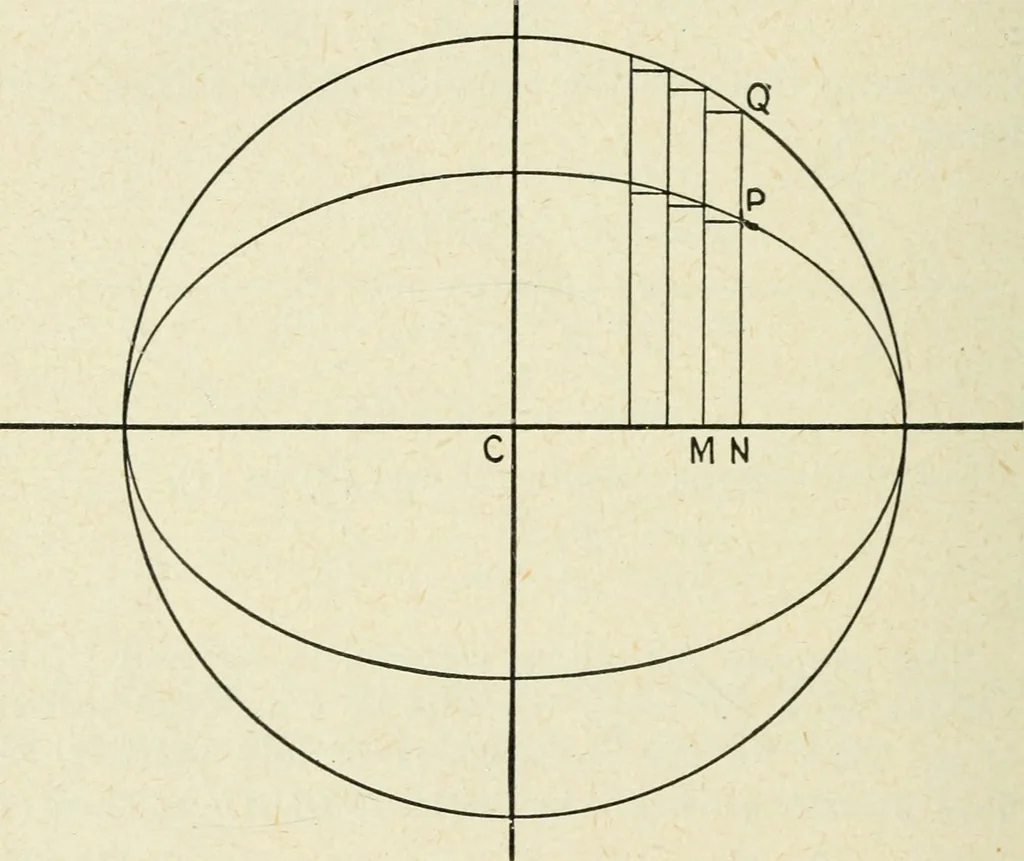
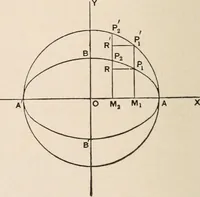
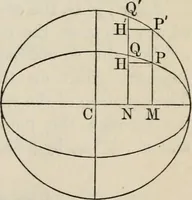
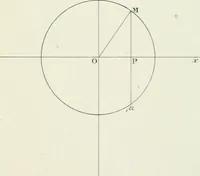
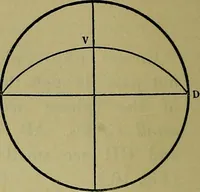
f y. Then for the co-ordinates of any point Q wehave x=CY, y=VQ. Let CP=a, CD=h. Then (4) becomes ^ + —r, = l, and is the equation of the ellipse referred to conjugatediameters as axes of co-ordinates. Another proof of this proposition will be found inCh. IX., §115. 168 Analytical Geometry. <… … This proportion holds for all such correspondingrectangles. Hence the sum of all such rectangles asFM is to the sum of all such rectangles as QM in theratio h : a. But if the number of these rectangles be increasedindefinitely, their width being indefinitely diminished,their sums become the areas…
Geometry, Analytic
Internet Archive · Western University Libraries · Public Domain Mark 1.0. Free to use for anything.