Woods, Frederick S. (Frederick Shenstone), 1864-, Bailey, Frederick H. (Frederick Harold), 1865- · Boston, New York [etc.] Ginn and Company · leaf 41
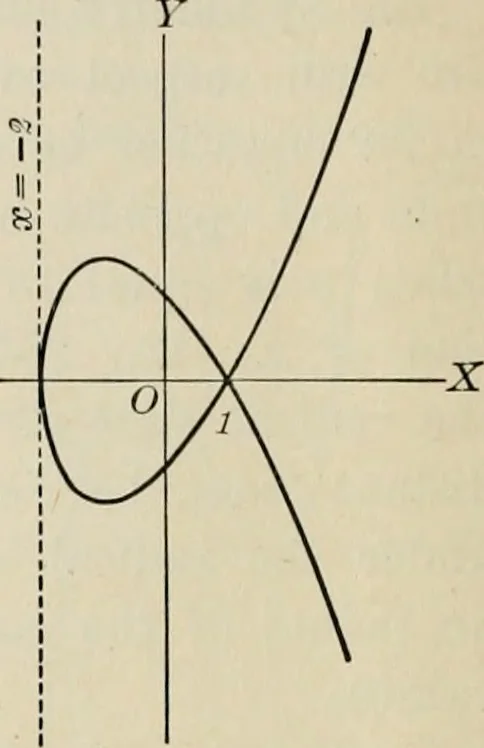
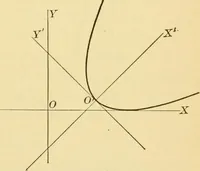
nt of theradical zero; and this coefficient is zero onlywhen x equals unity. Hence all of the graph lies to the right of theline x = — 2, as shown in fig. 27. To every value of x correspond two values of y which are in generaldistinct but become equal when x = 1. Hence the curve crosses itselfwhen… … Fig. 27 Ex. 3, y = ±V(x + 2)2(x-l) = ±(x + 2)Vx-l. The line x =1 divides the plane (fig. 28) intotwo sections. If x > 1, the radical is real and there is apart of the graph in the corresponding sec-tion of the plane. If x < 1, the radical isimaginary and there will be no points of thegraph…
Geometry, Analytic · Calculus
Internet Archive · California Digital Library · Public Domain Mark 1.0. Free to use for anything.