Archaic England, an essay in deciphering prehistory from megalithic monuments, earthworks, customs, coins, placenames, and faeric superstitions (1919)
Bayley, Harold · London : Chapman & Hall ltd. · leaf 297
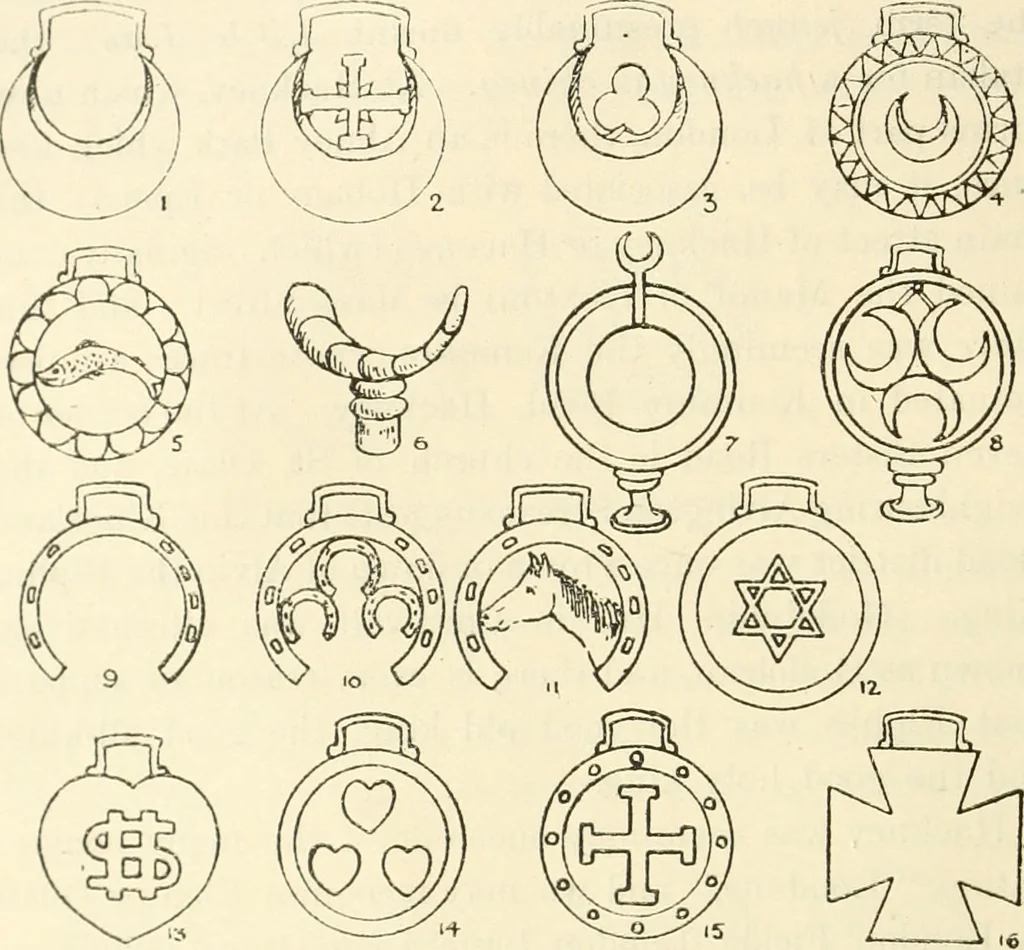
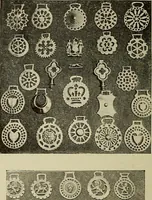
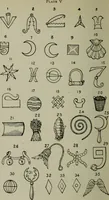
ing Dais-ton - was very possibly a Tallstoue, equivalent to the Cornishtal cam or high rock. The adjective long or lanky is probably of Hellenicorigin, and the giants or long men sometimes carved in 1 Madeley, E., The Science of Correspondence, p. 194. 2 Dalston in Cumberland is assumed to tiave… … Fig, 134.—Metal ornaments found on hoivse trappings (NorthLincolnshire, 1907). Nos. 1-8 represent forms of the crescent amulet;Nos. 8-11, the horseshoe. No. 12 is a well-known mystic symbol.No. 15 shows the cross potenc^e, and No. 16 the cross patee; theseseem to denote Christian influence. Nos. 13…
Archaeology · England -- Antiquities
Internet Archive · California Digital Library · Public Domain Mark 1.0. Free to use for anything.