Astronomy for the use of schools and academies (1882)
Gillet, J. A. (Joseph Anthony), 1837-1908, Rolfe, W. J. (William James), 1827-1910 · New York : Potter, Ainsworth, & Co. · leaf 125
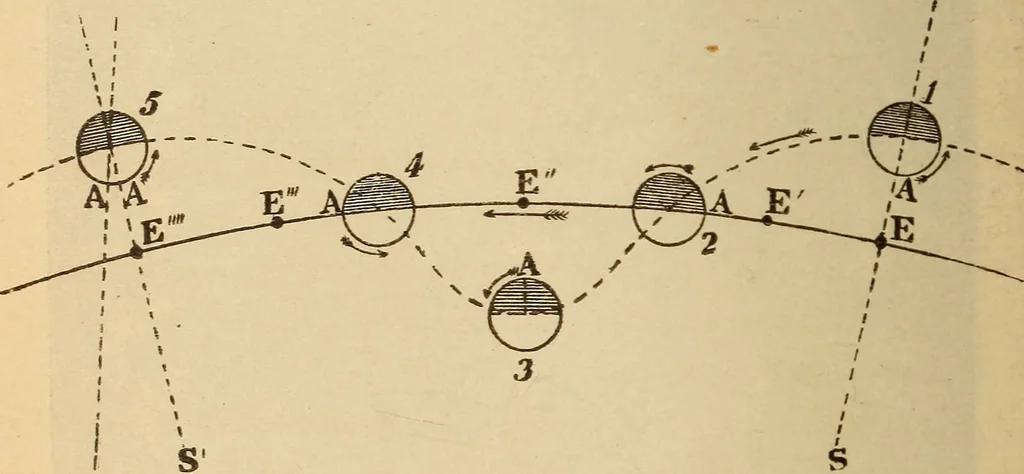
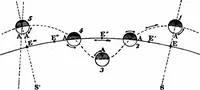
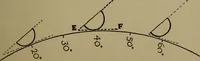
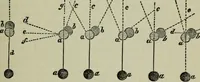
The lunar day is twenty-ninetimes and a half as long as the terrestrial day. Near themoons equator the sun shines without intermission nearlyfifteen of our days, and is absent for the same length oftime. Consequently, the vicissitudes of temperature towhich the surface is exposed must be very… … Fig. 125. It might seem, that, since the moon rotates on her axis inabout twenty-seven days, the lunar day ought to be twenty-seven days long, instead of twenty-nine. There is, however,a solar, as well as a sidereal, day at the moon, as on the earth;and the solar day at the moon is longer than the…
Astronomy
Internet Archive · Library of Congress · Public Domain Mark 1.0. Free to use for anything.