Astronomy for the use of schools and academies (1882)
Gillet, J. A. (Joseph Anthony), 1837-1908, Rolfe, W. J. (William James), 1827-1910 · New York : Potter, Ainsworth, & Co. · leaf 26
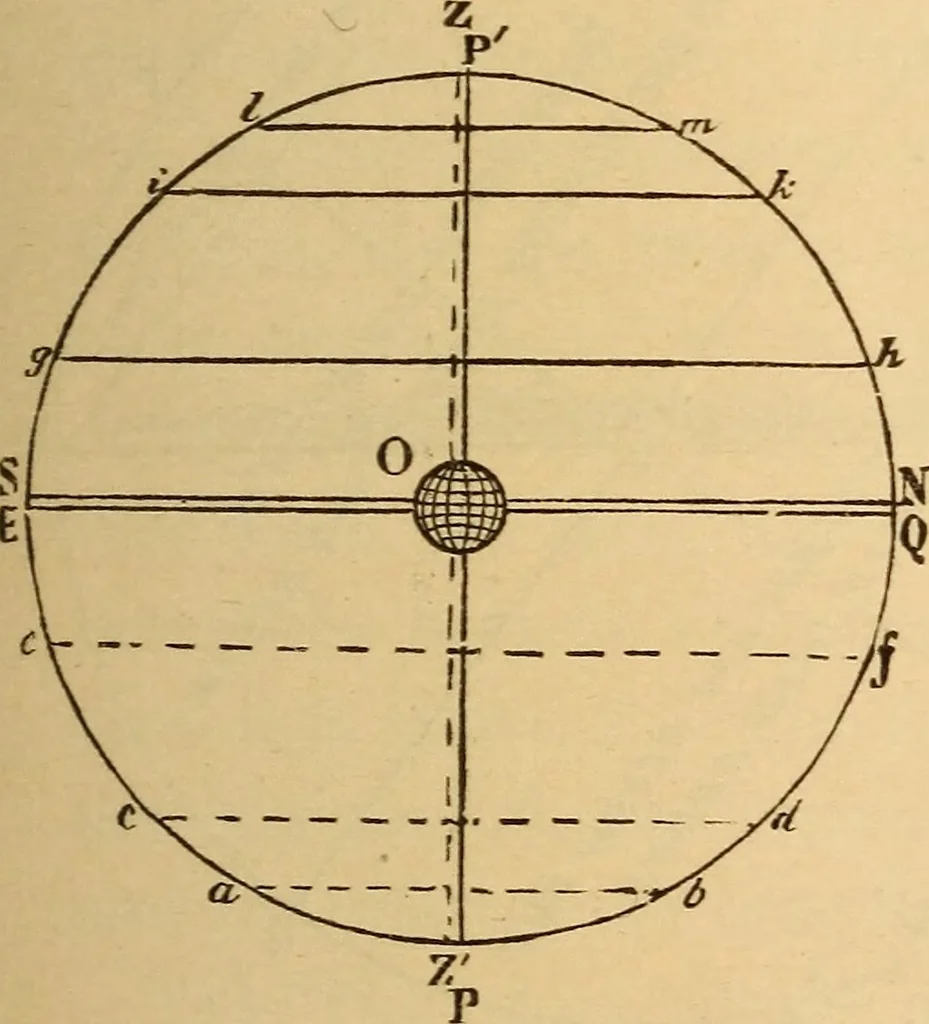
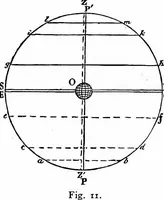
ator, and his hori-zon moves down from the north pole, and up from the southpole. The distance of the zenith from the equinoctial, and of the horizon from the celes-tial poles, will always be equal-to the distance of the observ-er from the equator. In otherwords, the elevation of thepole is equal… … Fig. 11. the distance of O from the equator, or the latitude of theplace. Two angles, or two arcs, which together equal 900, are IO ASTRONOMY. said to be complements of each other. ZE and E S inFig. 12 are together equal to 90° : hence they are comple- ments of each other. ZE
Astronomy
Internet Archive · Library of Congress · Public Domain Mark 1.0. Free to use for anything.
![An illustration from [Electric engineering.] (1902)](https://img.insideoutlibrary.com/img/200/ia-electricengineer01inte-390-149.webp)