Astronomy with an opera-glass: a popular introduction to the study of the starry heavens with the simplest of optical instruments, with maps and directions to facilitate the recognition of the constellations and the principal stars visible to the naked eye; (1888)
Serviss, Garrett Putman, 1851-1929 · New York, London, D. Appleton and company · leaf 47
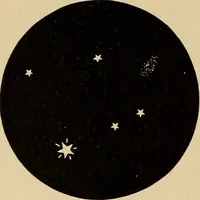
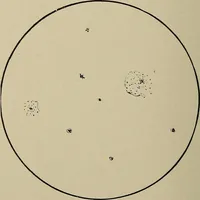
ymakes the two stars appear brighter, and Zeta Scorpionis. -*• * their colors more pronounced, but it showsa third, fainter star below them, making a small triangle,and brings other still fainter stars into sight, while the neb-ulous speck above turns into a charmingly beautiful littlestar-cluster,… … THE STARS OF SUMMER. 37 Following the bend of the Scorpions tail upward, wecome to the pair of stars in the sting. These, of course, arethrown wide apart by the opera-glass. Then let us sweep offto the eastward a little way and find the cluster known as7 M. You will see it marked on the map. Above…
Astronomy
Internet Archive · Library of Congress · Public Domain Mark 1.0. Free to use for anything.