The art of dialling : performed geometrically ... arthmetically ... instrumentally ... (1700)
Leybourn, William, 1626-1716 · London : T. Braddyll · leaf 90
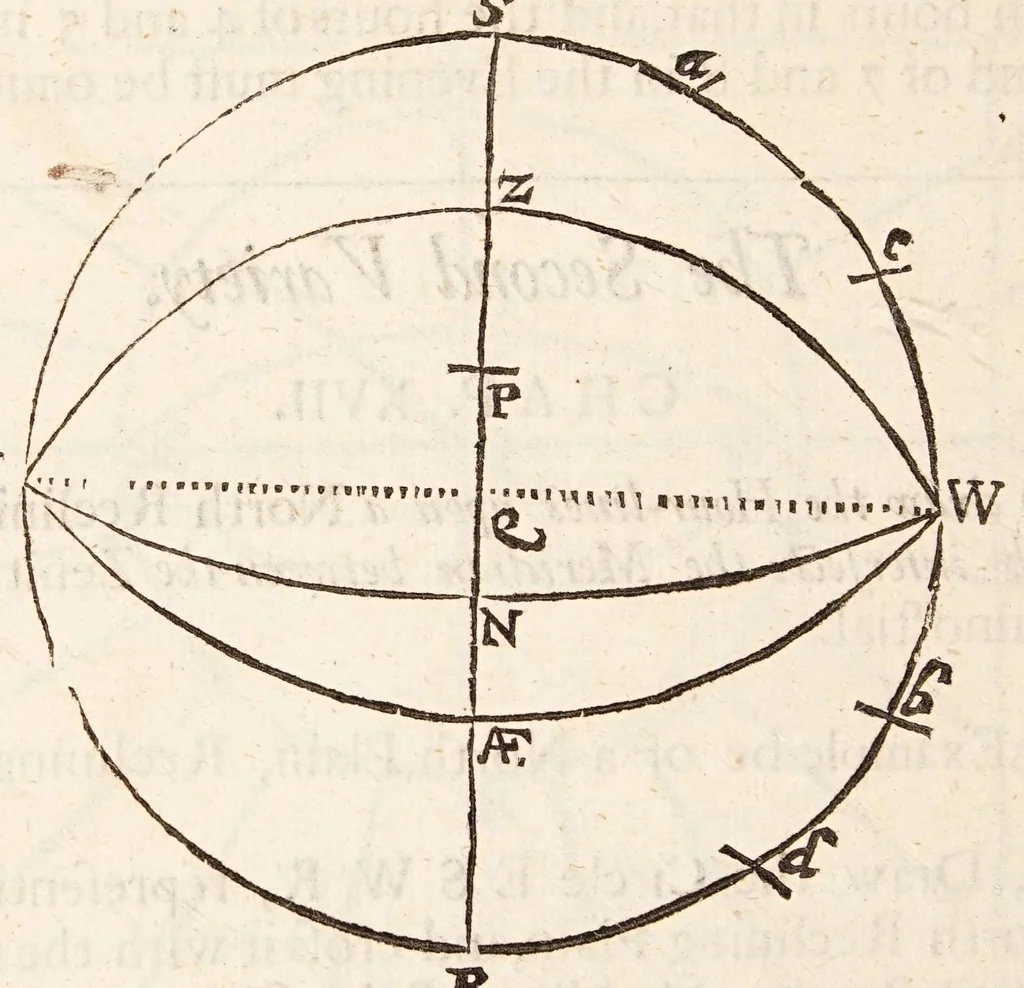
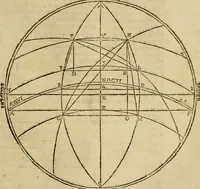
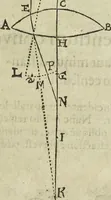
Fourthly , Becaufe the jEquino&ial is always 90 deg. di- ftant from either of the Poles, fet 90 deg. upon your Plain, from c to d. Then laying a Ruler to E and d, it will cut the Meridian in M, fo is^E the point of the interfe&ion of the iEquino&ial, with the North part of the Meridian ; wherefore… … Fifthly , The Horizon, iEquino&ial and Pole, being thus (bated in their true pofitions upon the Plain 5 the thing required in this Dial, is, The height of the Pole above the Plain , which may be found in this manner. - — Lay a Ruler from E to P5 and it will cut the Plain in c, the di¬ stance S c,…