The book of chess: containing the rudiments of the game, and elementary analyses of the most popular openings ; exemplified in games actually played by the greatest masters; including Staunton's analysis of the king's and queen's gambits, numerous positions and problems on diagrams, both original and selected; also a series of chess tales, with illustrations engraved from original designs ; the whole extracted and translated from the best sources (1857)
Agnel, Hyacinth R., 1779-1871, Staunton, Howard, 1810-1874 · New-York : D. Appleton & Co. · leaf 115
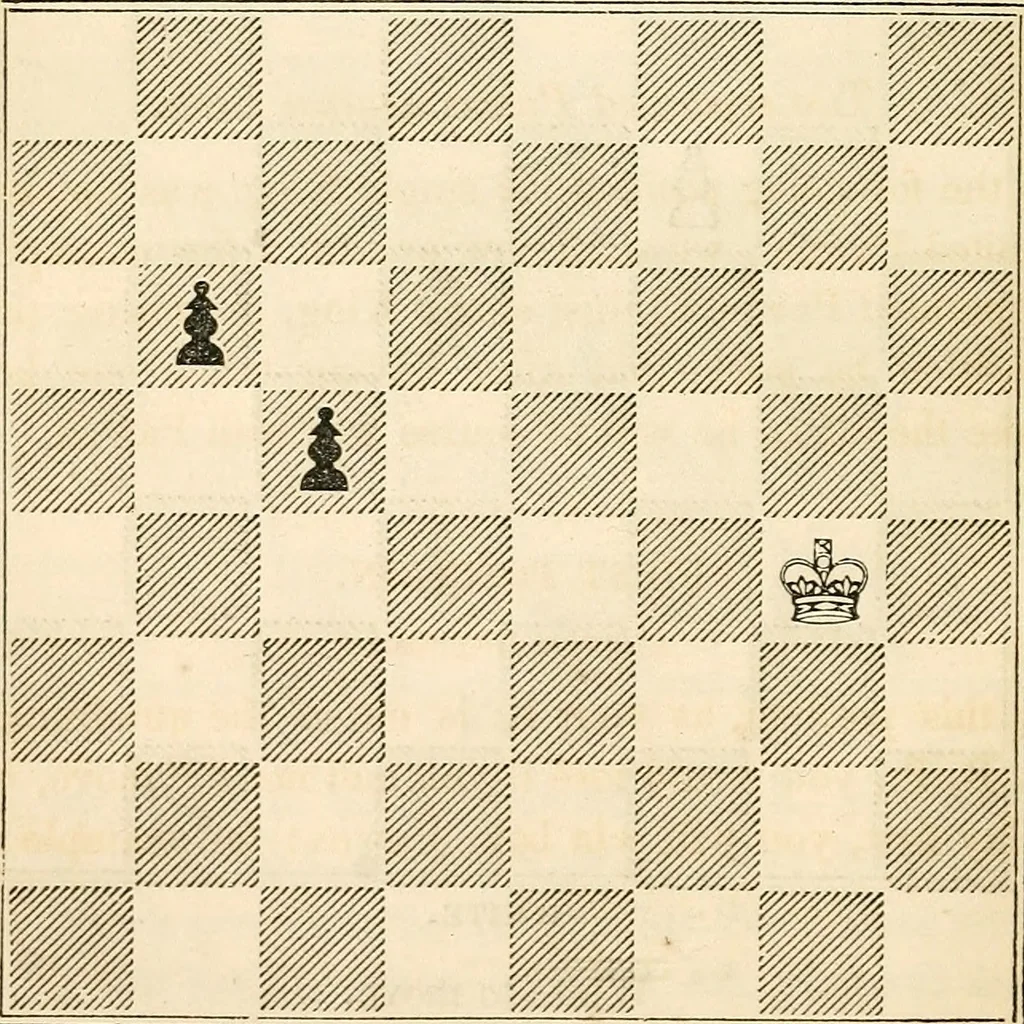
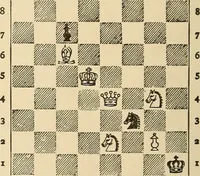
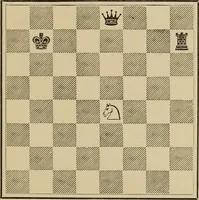
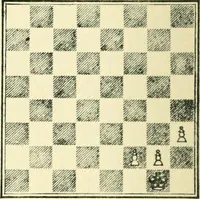
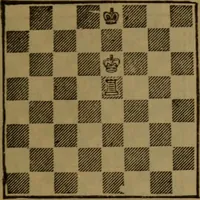
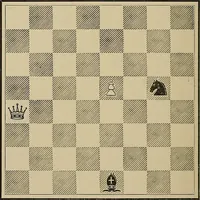
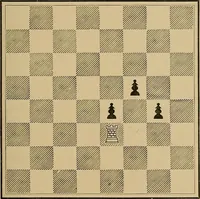
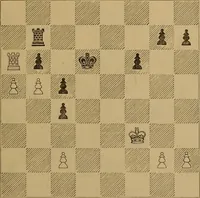
afterwardsqueens. You observe that by advancing the P., his B. preventsyour moving to your Q. 2d sq.: the only move you had inthe former situation to stop the P. This arose from the pe-culiar situation of your Kt., for had it been on almost anyother sq. you would not have lost. It is scarcely… … i-mVEK OF SINGLE KING TO STOP PAWNS. 101 Blacks Q. B. P. is the furthest advanced, and as your K.is in the quadrangle, you of course can stop the P. whetheiyou have the move or not. Suppose Black begin : 1. Q. B. P. one sq. 1. K. to K. B. 4th sq. 2. Q. B. P. one. 2. K. to his 3d sq. 3. Q. Kt. P.…
Chess
Internet Archive · Public Domain Mark 1.0. Free to use for anything.