Buddhist art in India : translated from the 'Handbuch' of Albert Grünwedel (1901)
Grünwedel, Albert, 1856-1935 · London : B. Quaritch · leaf 168
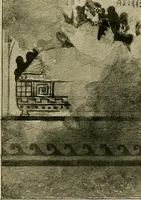
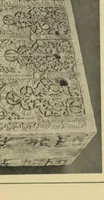
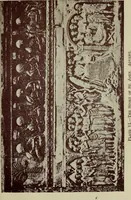
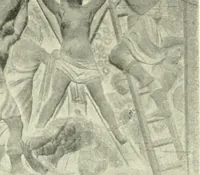
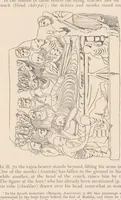
tyle, and serve only here and there as means to an end. What was said above about the character of the Indian lyric—especially as regards its strongly marked erotic features—may be repeated to a large extent about Amarävati. The compositions are loaded with a crowd of voluptuous and grotesque… … 108. CHADDANTA ELEPHANT. From the Ajanta wall-paintings. Beal, Si-yu-ki, vol. II, p. 49,
Buddhist art · Antiquities · Buddhist art -- India · India -- Antiquities
Internet Archive · Smithsonian Libraries and Archives · Public domain (published before 1931). Free to use for anything.