The Civil engineer and architect's journal, scientific and railway gazette (1839)
London : [William Laxton] · leaf 126
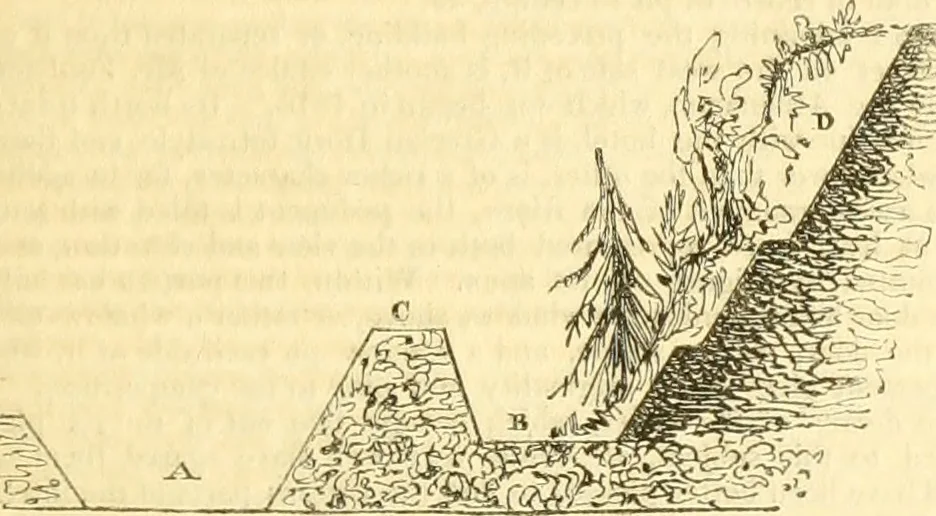
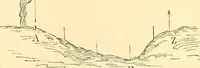
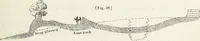
arth so obtained formed but a small portionof what was necessary to separate, by a proper embankment, theriver and the canal, the hill of Torvaine, although at least 150 feetabove the river, had to be cut into to a considerable extent, before asufficient quantity of stuff coidd be procured and the… … A—The Ness River. B—The Caledonian Canal, partly cut out of the foot of the hill, 50 feet wide at the bottom, and 120 feet at the top, and 20 feet deep.C—Embankment formed from the cutting opposite, with a slope of 1| to I, and 20 feet wide on the top, which divides the canal and the river…
Architecture · Civil engineering · Science
Internet Archive · Boston Library Consortium · Public Domain Mark 1.0. Free to use for anything.