The Civil engineer and architect's journal, scientific and railway gazette (1839)
London : [William Laxton] · leaf 189
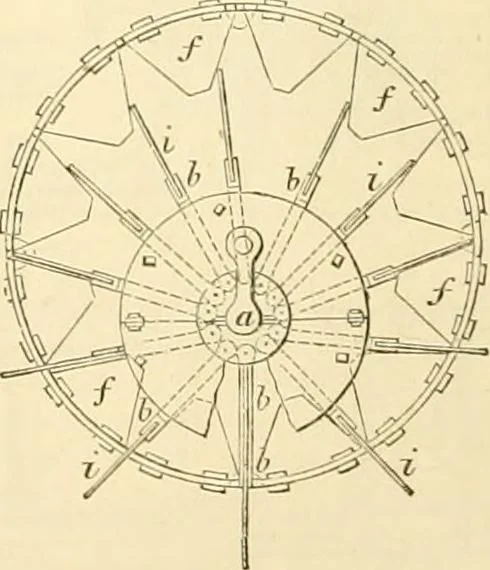
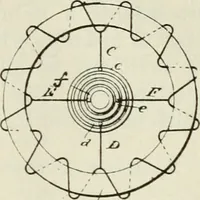
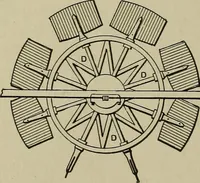
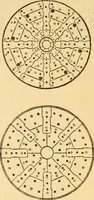
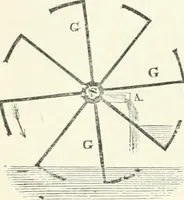
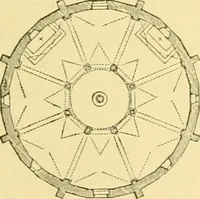
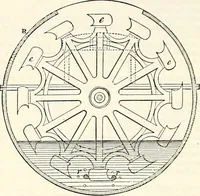
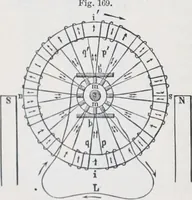
cted outwards when required to act, and are againwithdrawn into the cylinder as they go out of action ; such con-struction of paddle-wheel allowing it to be wholly immersed in thewater. To govern the action of the floats, the patentee prefers touse a cranked axis, one end of which enters into the… … which the floats are intended to act. The cylinder i, b, has asmany slits or openings through it as there are floats to the wheel;and within the cylinder are angular hollow vesselsy;/ which givebuoyancy to the wheel, aiul also serve for the purpose of oftering in-clined guiding surfaces to the…
Architecture · Civil engineering · Science
Internet Archive · Boston Library Consortium · Public Domain Mark 1.0. Free to use for anything.