The Clyde from its source to the sea, its development as a navigable river, the rise and progress of marine engineering and shipbuilding on its banks, and the leading historical, geological, and meteorological features of the Clyde Valley (1888)
Millar, W. J · London, Blackie · leaf 238
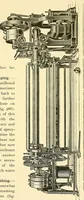
for many years on the Glasgow and Dublinroute. The use of wood, however, continued for many years,all the early Atlantic steamers being built of this mate-rial; and it was not till 1856, when the Persia was addedto the celebrated Cunard fleet, that that company intro-duced iron for the hulls of… … firm of T. Wingate & Co. had the special honour^ ofhaving made the engines of the first steamer whichcrossed the Atlantic from Britain, the Sirius, built in1837 by Menzies & Sons, of Leith. The engines were of 212 THE CLYDE: FROM SOURCE TO SEA. tlio side-lovor class, and had the special…
Steam-navigation · Clyde River (Scotland)
Internet Archive · University of Toronto, Robarts Library · Public Domain Mark 1.0. Free to use for anything.