The Clyde from its source to the sea, its development as a navigable river, the rise and progress of marine engineering and shipbuilding on its banks, and the leading historical, geological, and meteorological features of the Clyde Valley (1888)
Millar, W. J · London, Blackie · leaf 253
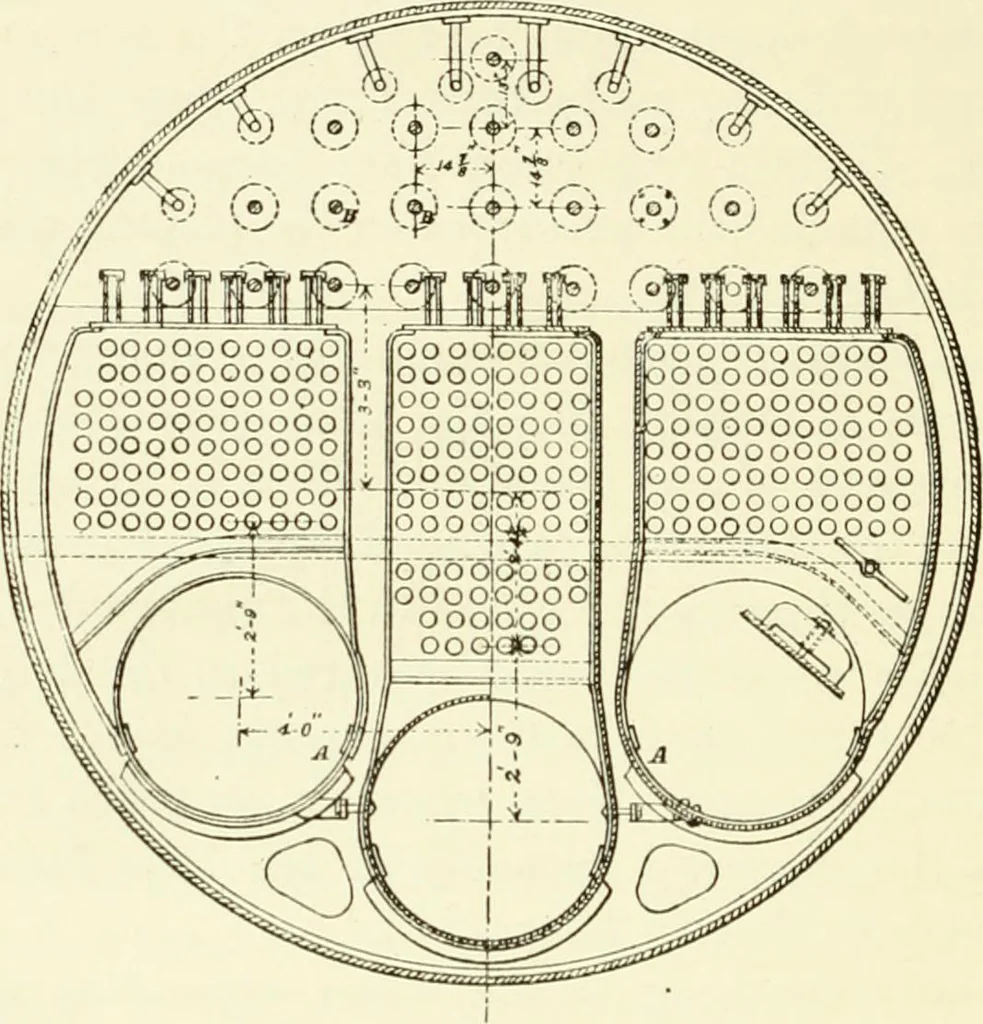
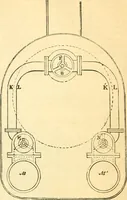
cylinder is full,then at the end of the stroke the volume of steam will bedouble of what it was when cut off. The pressure, there-fore, will be only one-half of what it was before being cut 226 THE CLYDE: FROM SOURCE TO SEA. off—that is to say, the volume having doubled, the pressurehas fallen to… … I Cross Scctiou of Muiiui; iiuik is considerable, in proportion to the steam used. Thus,if the steam were not used expansively at all thepressure would be uniform throughout the stroke; buta whole cylinder full of steam would be used. If cutoff at say half-stroke, the mean pressure would now…
Steam-navigation · Clyde River (Scotland)
Internet Archive · University of Toronto, Robarts Library · Public Domain Mark 1.0. Free to use for anything.