Colour-matching on textiles : a manual intended for the use of dyers, calico printers, and textile colour chemists, containing coloured frontispiece, twenty-nine illustrations, and fourteen dyed patterns in appendix (1901)
Paterson, David · London : Scott, Greenwood · leaf 77
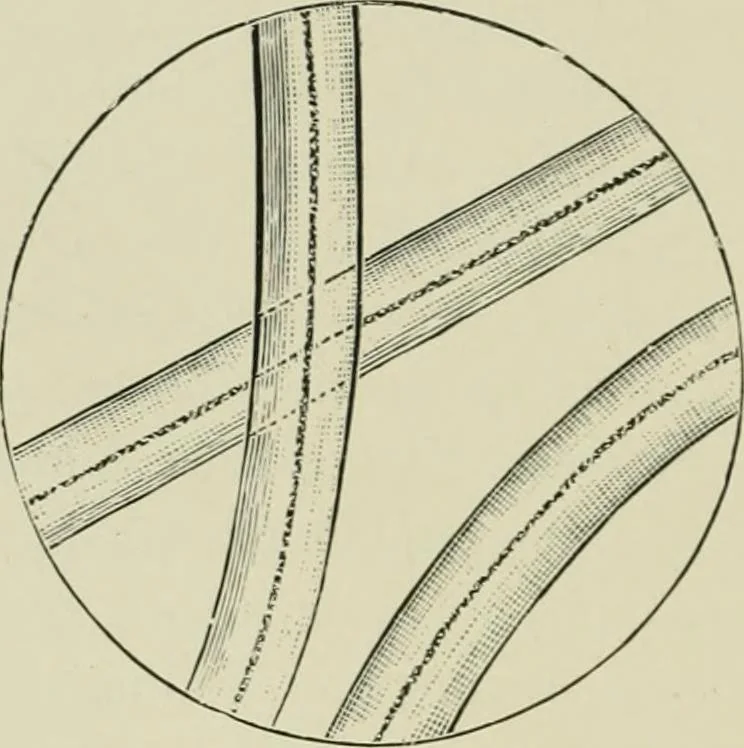
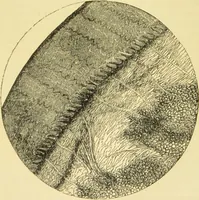
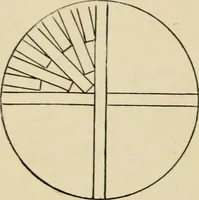
fibre,tin more difficult it is to match perfectly. Thus, dyed cotton,linen and jute are more easily matched than wool, and dyedwool, again, is easier matched than dyed silk. Indeed, silkand China grass, or the Ramie fibre, which has a splendid silk-like lustre, are most difficult fibres to match… … Fig. 21.—Microscopical appearance of silk fibre. in hue under the artificial lights. Dyed cotton or linen, on theother hand, being more opaque fibres, resemble the pigmentcolours, and do not show any abnormal changes in hueunder gaslight. The property of lustre, or of reflecting light, possessedby…
Color in the textile industries · Dyes and dyeing
Internet Archive · Public Domain Mark 1.0. Free to use for anything.