A compendium of astronomy; containing the elements of the science, familiarly explained and illustrated, with the latest discoveries. Adapted to the use of schools and academies, and of the general reader (1850)
Olmsted, Denison, 1791-1859 · New York, R. B. Collins · leaf 170
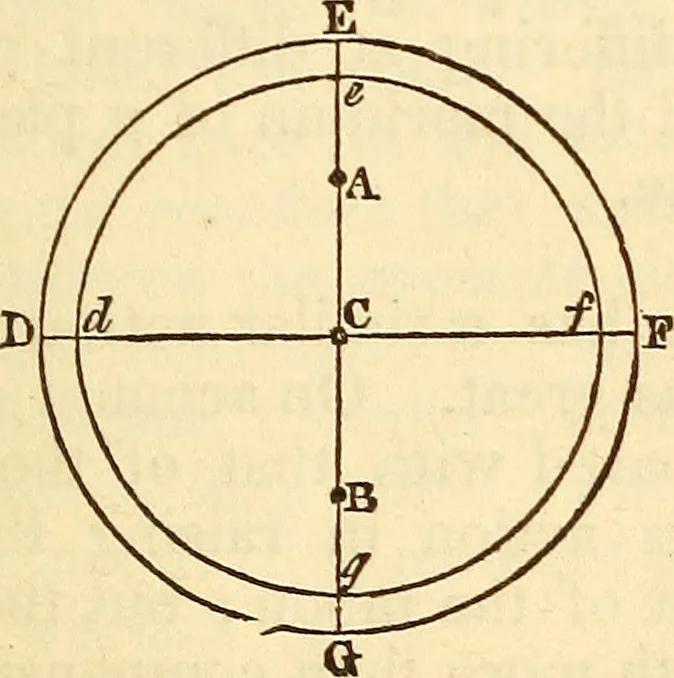
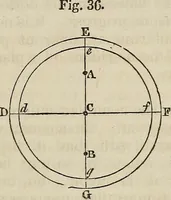
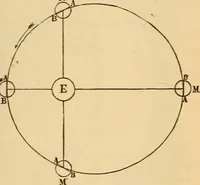
urface, moving freely under this impulse,endeavor to desert the solid mass and fall towards themoon. For a similar reason the waters in the oppositehemisphere falling less towards the moon than the solidearth are left behind, or appear to rise from the centerof the earth. 196. Let DEFG (Fig. 36,)… … cular ring exterior to it, the covering of waters. Let Cbe the center of gravity of the solid mass, A that of thehemisphere next tcrthe moon, (for the center of gravityof a ring is within the ring,) and B that of the remoterhemisphere. Now the force of attraction exerted bythe moon, acts in the…
Astronomy
Internet Archive · Library of Congress · Public Domain Mark 1.0. Free to use for anything.
![An illustration from Nicolai Copernici Torinensis De reuolutionibus orbium coelestium, libri VI : Habes in hoc opere iam recens nato, & aedito, studiose lector, motus stellarum, tam fixarum, quàm erraticarum, cum ex ueteribus, tum etiam ex recentibus obseruationibus restitutos: & nouis insuper ac admirabilibus hypothesibus ornatos. Habes etiam tabulas expeditissimas, ex quibus eosdem ad quoduis tempus quàm facillime caculare poteris. Igitur eme, lege, fruere. [Line in Greek] (1543)](https://img.insideoutlibrary.com/img/200/ia-nicolaicopernici00cope-187-104.webp)
![An illustration from Nicolai Copernici Torinensis De reuolutionibus orbium coelestium, libri VI : Habes in hoc opere iam recens nato, & aedito, studiose lector, motus stellarum, tam fixarum, quàm erraticarum, cum ex ueteribus, tum etiam ex recentibus obseruationibus restitutos: & nouis insuper ac admirabilibus hypothesibus ornatos. Habes etiam tabulas expeditissimas, ex quibus eosdem ad quoduis tempus quàm facillime caculare poteris. Igitur eme, lege, fruere. [Line in Greek] (1543)](https://img.insideoutlibrary.com/img/200/ia-nicolaicopernici00cope-162-91.webp)