A compendium of astronomy; containing the elements of the science, familiarly explained and illustrated, with the latest discoveries. Adapted to the use of schools and academies, and of the general reader (1850)
Olmsted, Denison, 1791-1859 · New York, R. B. Collins · leaf 38
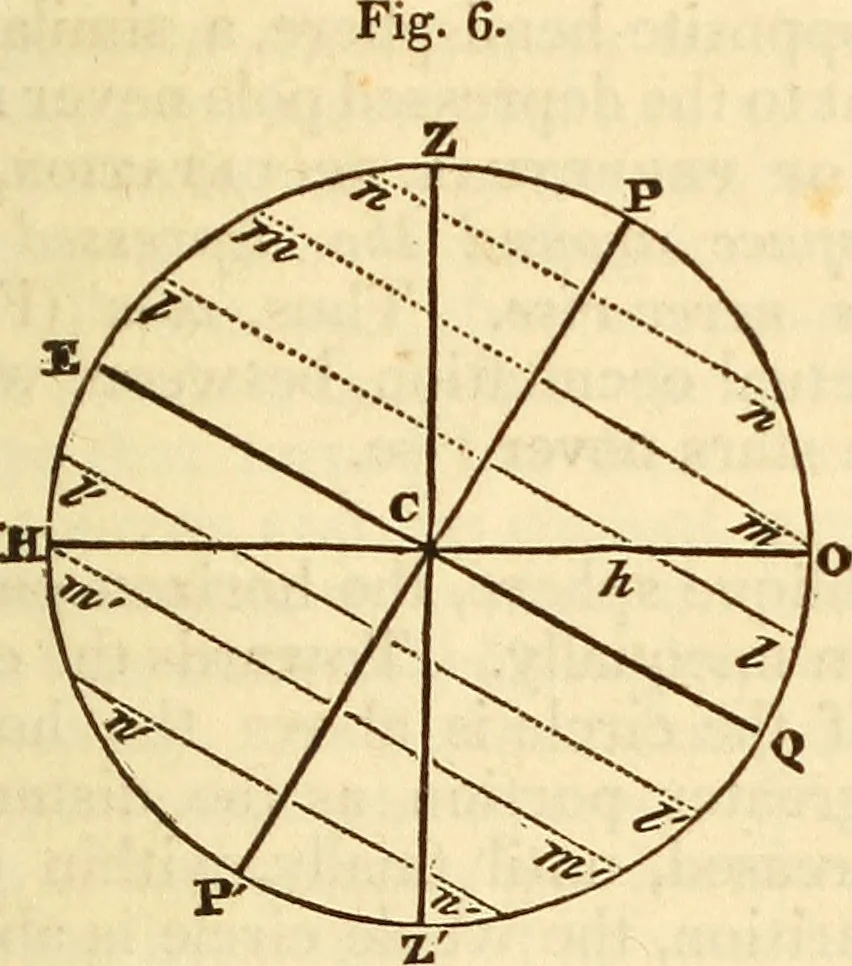
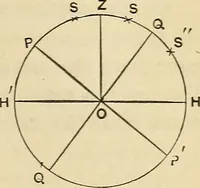
ion, at an angle of 40°, being al-ways equal to the co-altitude of the pole. Thus, let HO(Fig. 6,) represent the horizon, EQ the equator, andPP the axis of the earth. Also, 11, mm, &c, parallelsof latitude. Then the horizon of a spectator at Z, inlatitude 50° reaches to 50° beyond the pole; and… … the elevation of the diurnal circles grows less and less,and consequently the motions of the heavenly bodiesmore and more oblique, until finally, at the pole, wherethe latitude is 90°, the angle of elevation of the equatorvanishes, and the horizon and equator coincide witheach other, as before…
Astronomy
Internet Archive · Library of Congress · Public Domain Mark 1.0. Free to use for anything.