Lynde, Carleton John, b. 1872 · New York : Macmillan · leaf 211
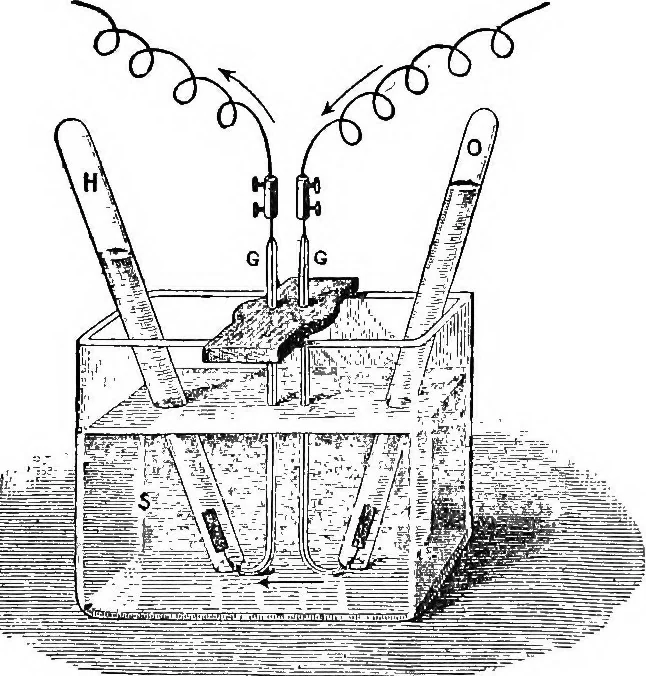
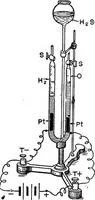
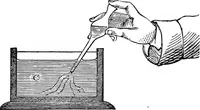
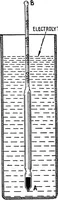
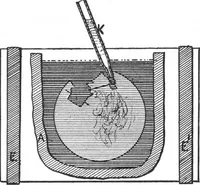
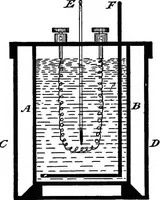
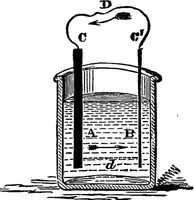
attracted by thepositively charged anode and give up their charge to the anode.They then unite with water to form sulphuric acid and oxygen.The H ions are attracted by the negatively charged cathode, andgive up their charge to it. They then collect as hydrogen gas.The same explanation holds for… … Fig. 146. — Electrolysis of water. ELECTROPLATING 197 anode and form oxygen as above. The Cu ions are attractedby the cathode and form a deposit of copper on it. When a current passes through a solution of any salt, acid,or base, the positive, metal or hydrogen, ions of the solutionmove with the…
Physics · Home Economics
Internet Archive · Cornell University Library · Public Domain Mark 1.0. Free to use for anything.