The seven follies of science; a popular account of the most famous scientific impossibilities and the attempts which have been made to solve them. To which is added a small budget of interesting paradoxes, illusions, and marvels (1906)
Phin, John, 1830-1913 · New York, D. Van Nostrand company · leaf 45
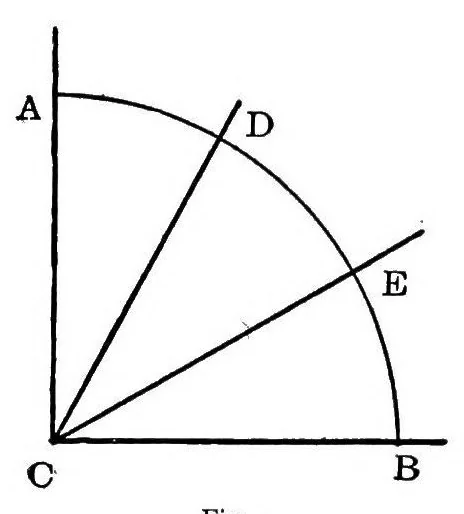
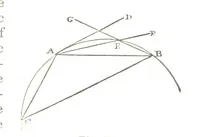
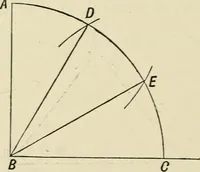
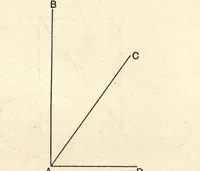
THE SEVEN FOLLIES OF SCIENCE 34 describe a short arc crossing the arc ADEB in D, and join CD. The angle DCB will be 60°, and as the angle ACB is 90°, the angle ACD must be 30°, or one-third part of the whole. In the same way lay off the angle ACE of 60°, and ECB must be 30°, and the remainder DCE… … Fig. 4- into three equal parts, or in other words, it is trisected. And with a slight modification of the method, the same may be done with an angle of 45°, and with some others. These however are only special cases, and the very essence of a geometrical solution of any problem is that it shall be…
Scientific recreations · Geometry
Internet Archive · Cornell University Library · Public domain (published before 1931). Free to use for anything.