The physiology of vision with special reference to colour blindness (1920)
Edridge-Green, Frederick William, 1863- · London, G. Bell and sons · leaf 106
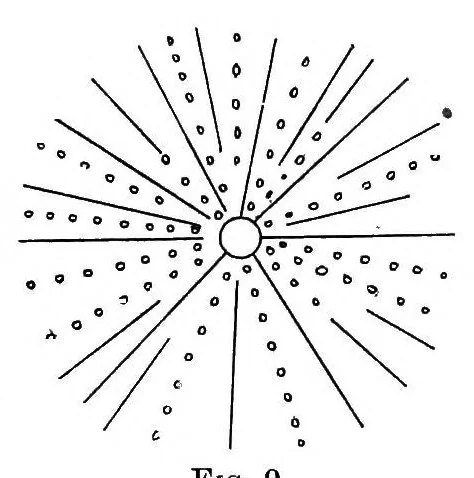
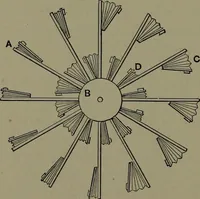
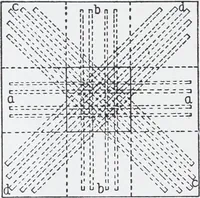
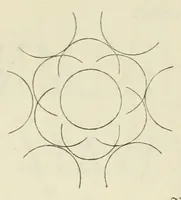
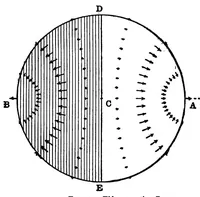
onding to the point where the greatest movement is seen, is free from vessels. The appearance is also very different from that of the movement of blood in vessels. The experiment succeeds best if the eyes have been previously exposed to a fairly bright light. An opaque disc in a spectacle frame… … Fig. 9. of the fovea. (Pig. 9.) When seen with one eye this star has eight rays. It is due to the structure of the lens. There appears to be rapid circular movement behind this star—that is, the
Color vision · Vision · Color blindness · Refraction · Ophthalmology
Internet Archive · Cornell University Library · Public domain (published before 1931). Free to use for anything.