The heavens above: a popular handbook of astronomy (1882)
Gillet, J. A. (Joseph Anthony), 1837-1908 · New York, Chicago, Potter, Ainsworth, & Co. · leaf 312
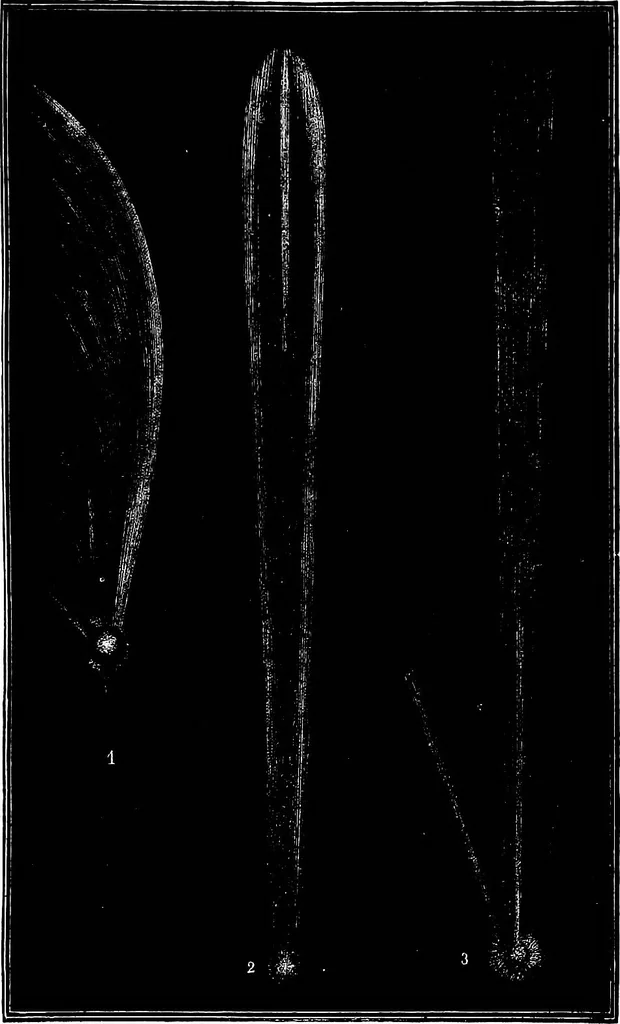
n ellipse. So, at anydistance from the sun, there is a certain velocity which wouldcause a comet to describe a parabola; while a greater velocitywould cause it to describe a hyperbola, and a less velocity todescribe an ellipse. If the comet is moving in an ellipse, theless its velocity, the less… … Fig. 320. Comets move in every direction in their orbits, and theseorbitj have every conceivable inclination to the ecliptic. 286 ASTRONOMY.
Astronomy
Internet Archive · Cornell University Library · Public Domain Mark 1.0. Free to use for anything.