Cycling art, energy and locomotion: a series of remarks on the development of bicycles, tricycles, and man-motor carriages (1889)
Scott, Robert Pittis · Philadelphia, J. B. Lippincott · leaf 175
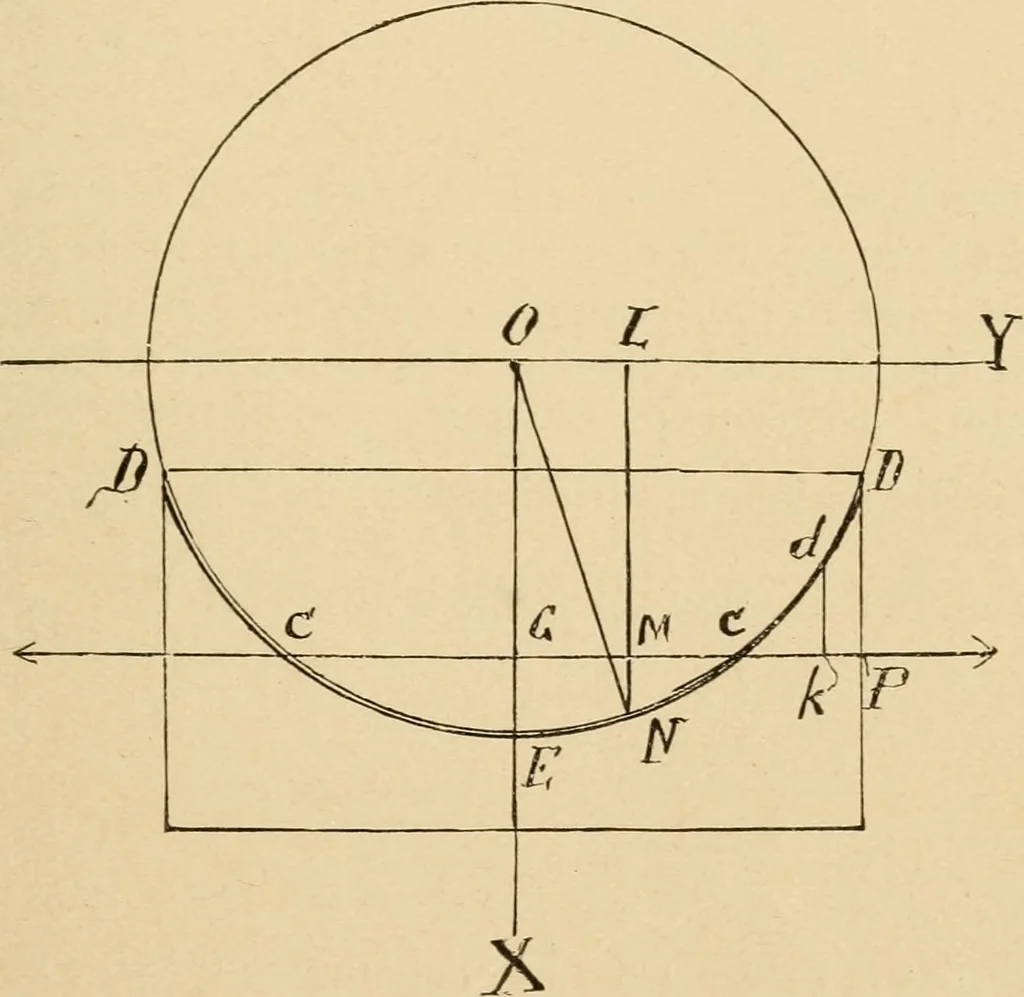
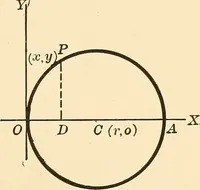
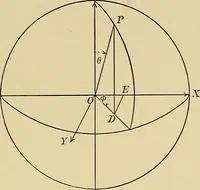
)arallel lines in the groove somewhere between D andE, say the lines through cc perpendicular to the planeof the paper? This granted, it follows that points on theball-surface touching the groove above c are going faster, Fig. 2. … Transverse section groove and ball. while those touching below c are going slower thanpoints touching at c. Hence, no wonder there is fric-tion. The position of c c is such that the sum ofthe moments of friction above c c balances the sum ofthe moments of friction below c c. Take axes 0 X,0 Y, as…
Cycling · Bicycles
Internet Archive · Boston Public Library · Public Domain Mark 1.0. Free to use for anything.