Cycling art, energy and locomotion: a series of remarks on the development of bicycles, tricycles, and man-motor carriages (1889)
Scott, Robert Pittis · Philadelphia, J. B. Lippincott · leaf 38
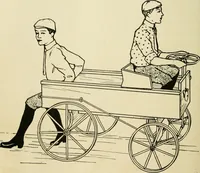
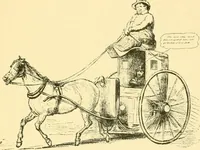
cycle, such as that of Dennis Johnson,patented in England, No. 4321, 1818, did not supportthe rider entirely free from the ground. It consistedin a pair of wheels placed under him, constituting asort of third or rolling leg, the feet, though not forsupport, still touching the ground. This machine… … FROM WALKING TO RIDING. 37 the Johnson machine the legs are used for projectileforce only, and serve as a motor, the weight of thebody being supported on rolling mechanism as afore-said ; hence it was a more natural and palpable sequenceto walking than other prior contrivances in which therider was…
Cycling · Bicycles
Internet Archive · Boston Public Library · Public Domain Mark 1.0. Free to use for anything.