Cyclopedia of textile work : a general reference library on cotton, woollen and worsted yarn manufacture, weaving, designing, chemistry and dyeing, finishing, knitting, and allied subjects (1907)
Chicago : American school of correspondence · leaf 353
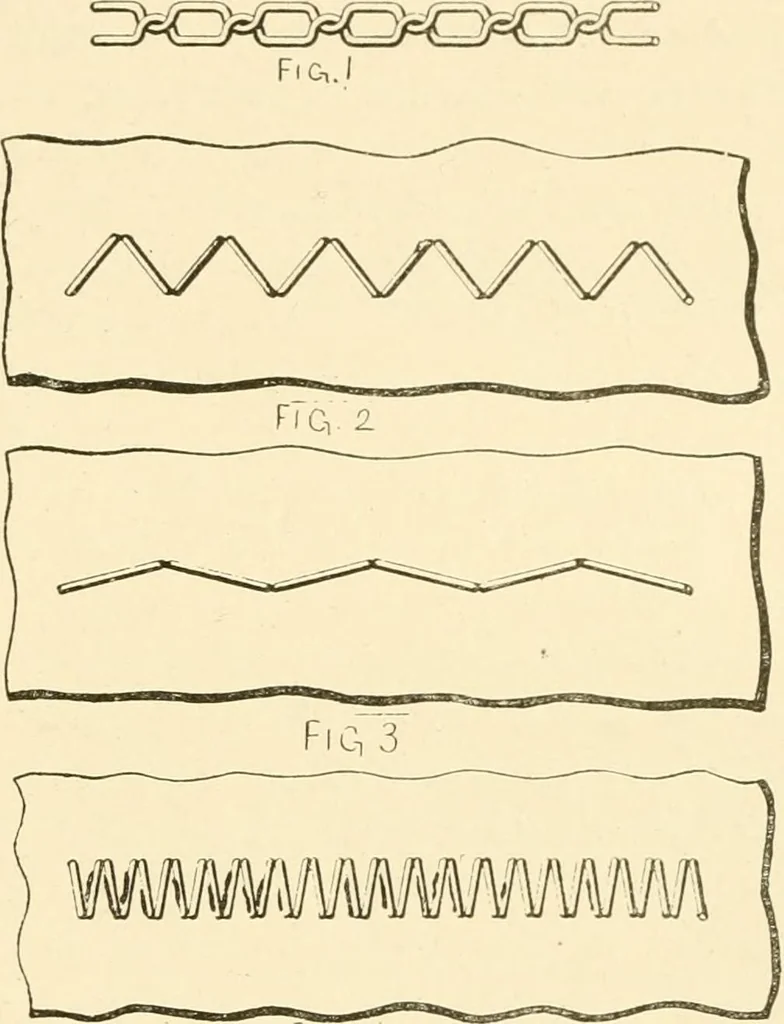
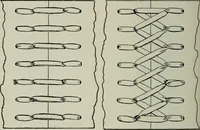
hread chainstitch, because the second or additional thread not only doubled theseams strength, but the manner in which the two threads were loopedor interlaced with each other, produced a greater degree of elasticity—two elements which we know are of vital importance. THE LOCK STITCH, DOUBLE CHAIN… … Fig. 10. Diagrams of the !>(; 319 26 KNIT GOODS FINISHING Lock Stitch. The first, or lock-stitch, shown in Fig. 11, is theoldest form of the three. It is not used in the actual making of agarment from knit goods to any great extent, owing to its lack ofelasticity, that is, it will not yield when…
Textile industry · Textile fabrics
Internet Archive · UMass Dartmouth, Claire T. Carney Library · Public Domain Mark 1.0. Free to use for anything.
![An illustration from [Electric engineering.] (1902)](https://img.insideoutlibrary.com/img/200/ia-electricengineer02inte-334-186.webp)