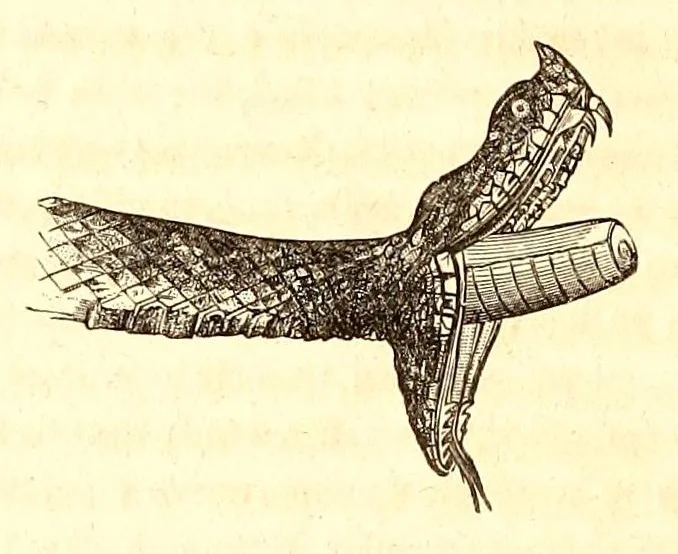
10 Turtles and large snakes will require this operation. To one accustomed to the skinning of birds, the skinning of frogs or other reptiles will present no difficulties. The skinning of a snake is still easier. Open the mouth and sepa- rate the skull from the vertebral column, detaching all… … down to the extremity of the tail. The skin thus inverted should be restored to its proper state, and then put in spirit or stuffed, as con- venient. Skins of reptiles may be stuffed with either sand or saw- dust, by the use of which their shape is more easily restored. Turtles and tortoises are…
Smithsonian Institution · Natural history · Zoological specimens · Botanical specimens · Museum techniques
Internet Archive · Smithsonian Libraries · Public domain (published before 1931). Free to use for anything.