Discoveries and inventions of the nineteenth century (1905)
Routledge, Robert · London : G. Routledge and Sons · leaf 709
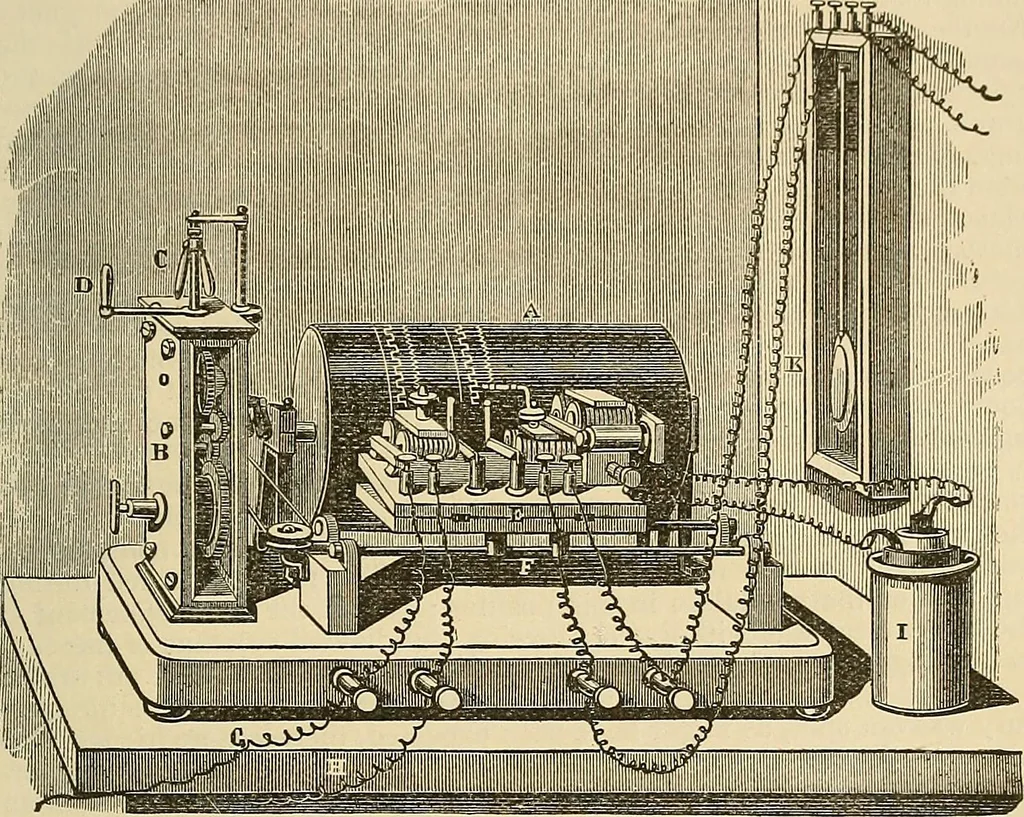
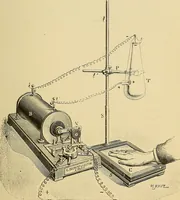
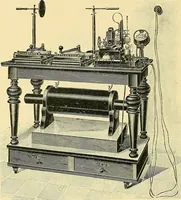
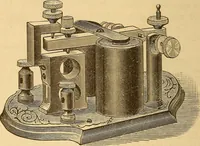
he time occupied in the passage of the glass mayaccurately be read off. If this simple experiment be understood, theprinciple of the electric chronograph will be clear. Substitute for thesliding glass a cylinder covered with white glazed paper which has beencoated with lampblack in the same manner… … Fig. 316.— The Electric Chronograph. tions on the surface of the paper, and let the same mechanism which turnsthe cylinder, slowly draw the sounding-fork along a straight slide parallel tothe axis of the cylinder. The waved line will not form a complete circle onthe surface of the cylinder, but…
Inventions
Internet Archive · Boston Library Consortium · Public Domain Mark 1.0. Free to use for anything.