Hambidge, Jay, 1867-1924, Yale University. Rutherford Trowbridge Memorial Publication Fund · New Haven, Conn., New York City, Yale University Press; [etc., etc.] · leaf 50
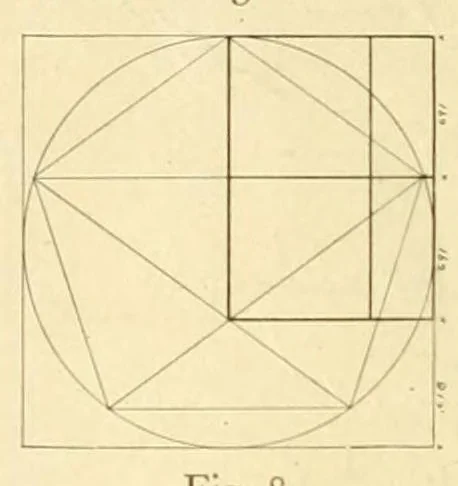
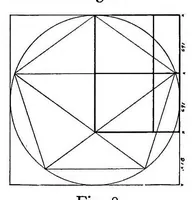
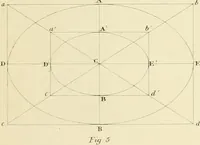
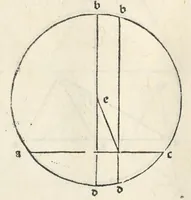
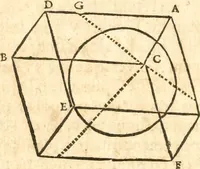
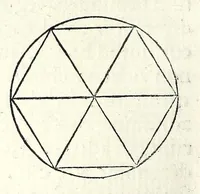
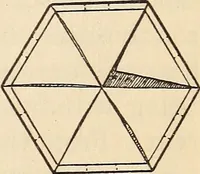
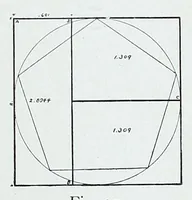
g. 7, is 1.809. ^^ is .809, CD is .309, AC is i or unity, and AD is unity minus .309, or .691. This fraction .691, is the reciprocal of 1.4472, or a square plus a root-five rectangle. ED is this shape, the key to the Parthenon plan and many other Greek designs. It is a favorite shape for many… … Fig. 8. The distance AB in Fig. 9, is the difference between 1.809 ^''"^ 2> o"" •'^9^> s"d this fraction multiplied by 2 equals .382, the reciprocal of 2.618. Therefore the area AD is composed of four shapes, two squares and two whirling square rectangles. Fig. 9.
Design · Vases, Greek
Internet Archive · New York Public Library · Public domain (published before 1931). Free to use for anything.