Dynamos and motors; a text book for colleges and technical schools (1911)
Franklin, William S. (William Suddards), 1863-1930, Esty, William, 1868-1928 · New York The Macmillan company · leaf 217
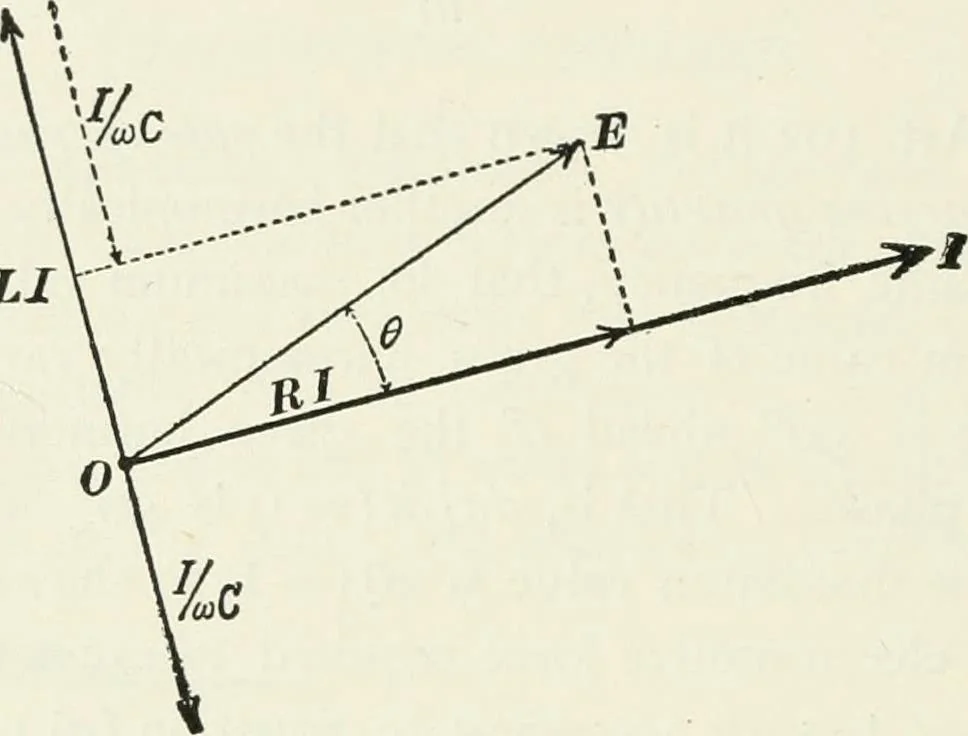
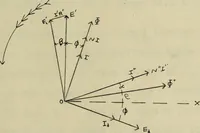
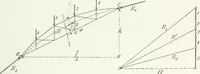
, so that e^qjC. Therefore the electromotive forcerequired to overcome the reaction of the condenser is equal toqjC, that is, it is in phase with q (or 90° behind z), and itsmaximum value is Q/(7 (or IjcoC, since I = coQ). jo6 DYNAMOS AND MOTORS. Sohitioji of the given problem by the clock diagram.… … Fig. 146. l/coC, respectively, as shown, and the total electromotive force isrepresented by the line E vi^hich is the vector sum of RI, (oLland IjcoC. Therefore, from the right triangle whose sides are(RI), {coLI -l/<oC) and E we have or, using equations (45) and (46) of Art. (103), we have and…
Dynamos · Electric motors
Internet Archive · Gerstein Library, University of Toronto · Public Domain Mark 1.0. Free to use for anything.