Early Christian iconography and A school of ivory carvers in Provence (1918)
Smith, E. Baldwin (Earl Baldwin), 1888-1956 · Princeton, Princeton university press; [etc.,etc.] · leaf 115
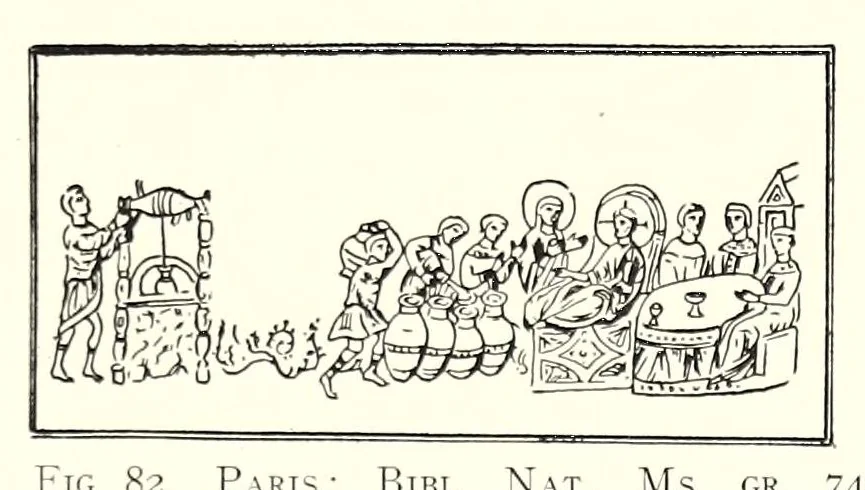
antine type is the most historical, for it represents the blind man, after Christ has put clay upon his eyes, washing in the well of Siloam. While the Gospels speak of four miracles of the kind, they give the artistic details for only two distinct scenes. Matthew writes that when Christ was… … Fig. 82. Paris : Bibl. Nat., Ms. gr. 74. The Miracle of Cana. Mark writes that Christ on His way to Jericho, when the blind man Bar- timeus who sat begging by the side of the road asked for mercy, told him that his faith had made him whole.3 Unlike the other miracles it is related in the Gospel of…
Christian art and symbolism · Ivory carving · Art
Internet Archive · Getty Research Institute · Public domain (published before 1931). Free to use for anything.