Electricity for public schools and colleges (1891)
Larden, W. (Walter), b. 1855 or 6 · London : Longmans · leaf 339
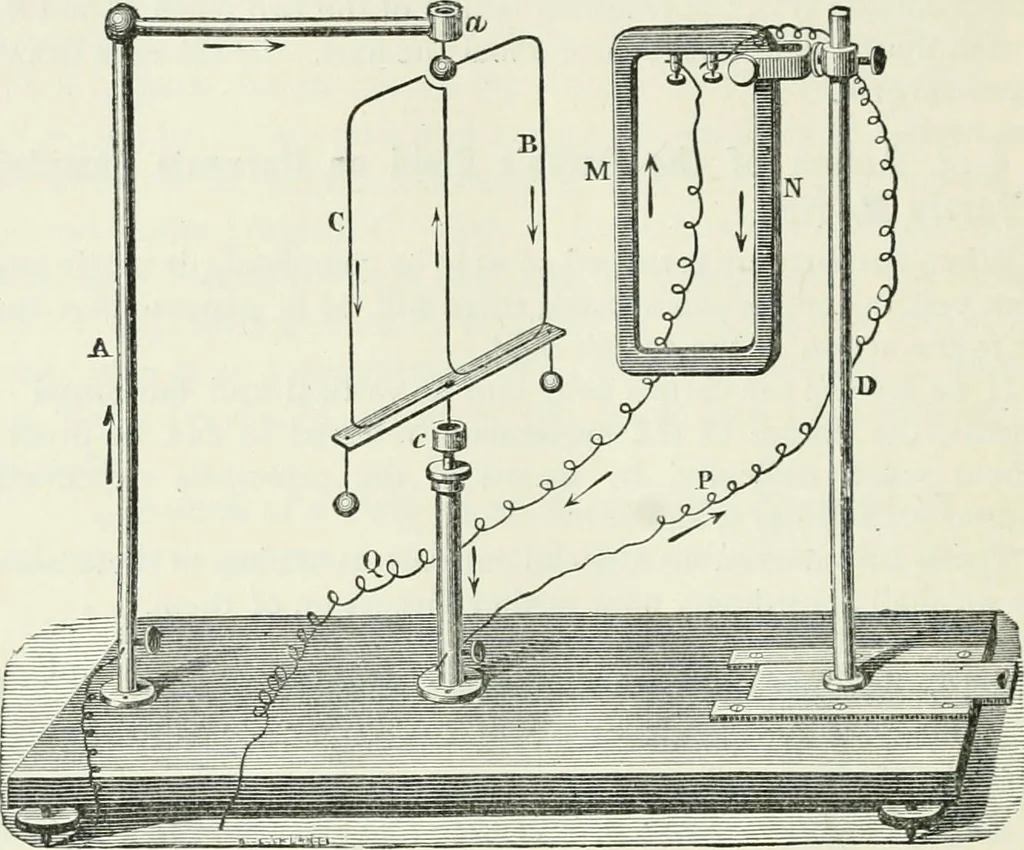
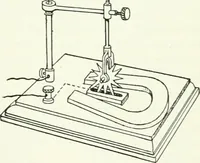
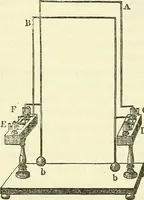
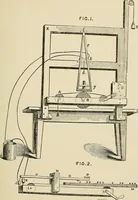
currents in M and in B are in opposite directions, and repulsionbetween M and B will be observed. When two wires bearing currents are not parallel, but are in-clined to one another, the following law is found to hold (^see alsoChapter XIX. § 8). 312 ELECTRICITY cu. xvni. Law II.— When two currents… … Fig. i. Or, two currents crossing o?ie another tend to move into a posi-tion in luhich they are parallel and in the same direction. Experiment. — This may be illustrated by-means of the arrangement here indicated. Thecurrent P Q acts mainly on the portion C D ofthe mobile current, and movements…
Electricity
Internet Archive · Gerstein Library, University of Toronto · Public Domain Mark 1.0. Free to use for anything.