An elementary treatise on analytical geometry : embracing plane co-ordinate geometry, and an introduction to geometry of three dimensions (1869)
Johnson, William Woolsey, 1841-1927 · Philadelphia : J.B. Lippincott · leaf 106
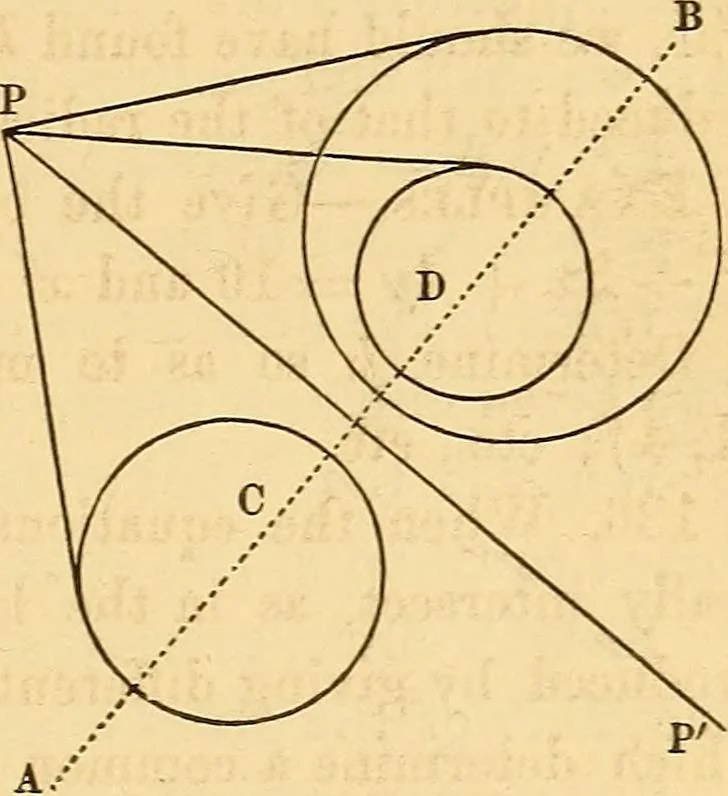
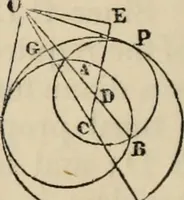
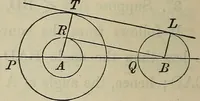
he common radical axis is y = 2x — 7, for this is readily seen tobe the only equation of the form y = mx -J- 5, which these valuesof x and y will satisfy. Thus, whether the two points common to the system are real,coincident or imaginary, they determine a common radical axis. 137. It was shown in… … x2 + y2 + dx + ey + /+ & (*2 +y2 + dx + <y + /) = 0, expresses that the square of the tangent from P on one of thegiven circles, equals the square of the tangent upon the other,multiplied by — k. Suppose &==— 1(so that —k = Y), then the tangentsfrom P on the two circles will beequal, as…
Geometry, Analytic
Internet Archive · Library of Congress · Public Domain Mark 1.0. Free to use for anything.