An elementary treatise on mechanics, embracing the theory of statics and dynamics, and its applications to solids and fluids (1868)
Smith, Augustus W. (Augustus William), 1802-1866 · New York : Harper · leaf 37
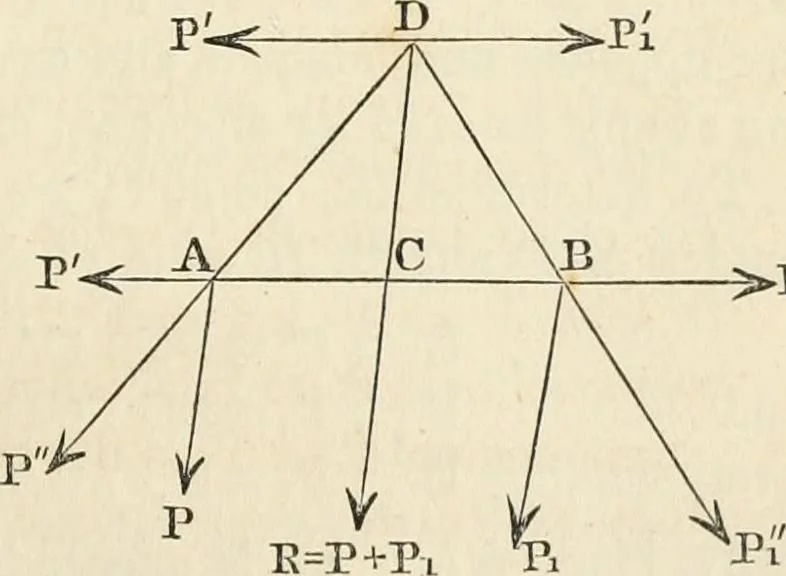
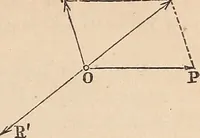
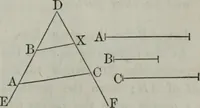
P,. The direc-tions of P and P, willmeet in some point D, atwhich we may supposethem to act. Replacing P by P and P, and P, by P, andPj, we now have, acting at D, the four forces P, P, P,,and Pj, of which P and P, are equal and opposite, while Pand Pj act in the direction DC, and have a resultant R… … >P 16 STATICS. P : P=DC : CA, and similarly from triangle BCD, P, :Pj=BC:DC.Compounding these ratios, we have, since P—P,, P : P,=BC : CA, or P.AC=P,.BC.2°. When the forces act in opposite directions.Let P and Px (Pj>P) be two parallel forces, acting at A and B in opposite directions,and…
Mechanics, Analytic
Internet Archive · California Digital Library · Public Domain Mark 1.0. Free to use for anything.