Newcomb, Simon, 1835-1909 · New York, H. Holt and company · leaf 112
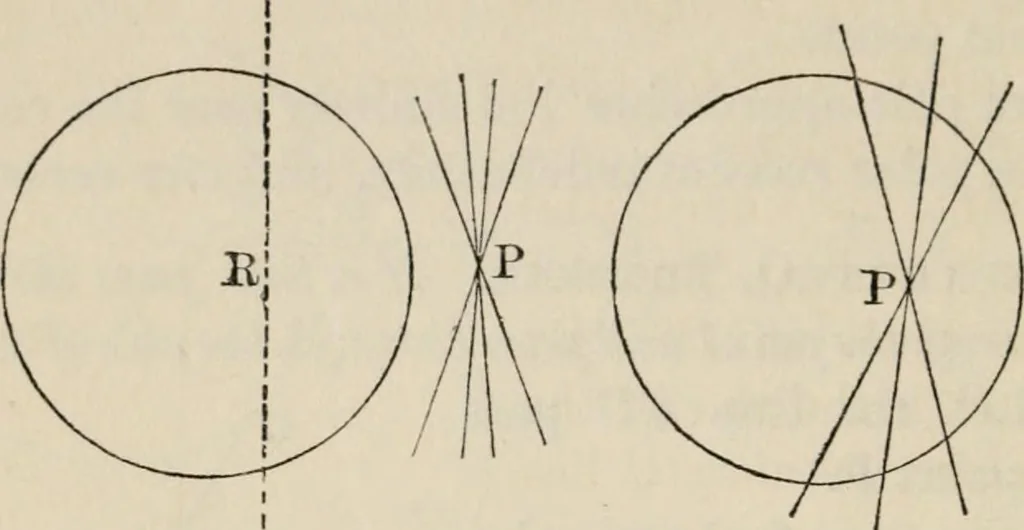
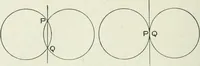
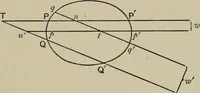
ing the proportions {a) and (h), we have OP.OP = OQ.OP, which gives the proportion OQ: 0P= OP : OP. Comparing this proportion with (c), Ave have OQ = OP. 96 PLANE ANALYTIC OEOMETRT. Hence P and Q coincide; that is, the pole P lies on thepohirP(2. Q. E. D. Cor, 1. We may imagine several lines all… … Cor. 2. We may imagine several points, all lying, like P,on the line CD. The theorem shows that the polars of thesepoints will all pass through Q, the pole of CD. Hence, If several points lie in a straight line, their polars will allpass through the pole of the line. Kemark. These several theorems…
Geometry, Analytic
Internet Archive · California Digital Library · Public Domain Mark 1.0. Free to use for anything.