Newcomb, Simon, 1835-1909 · New York, H. Holt and company · leaf 123
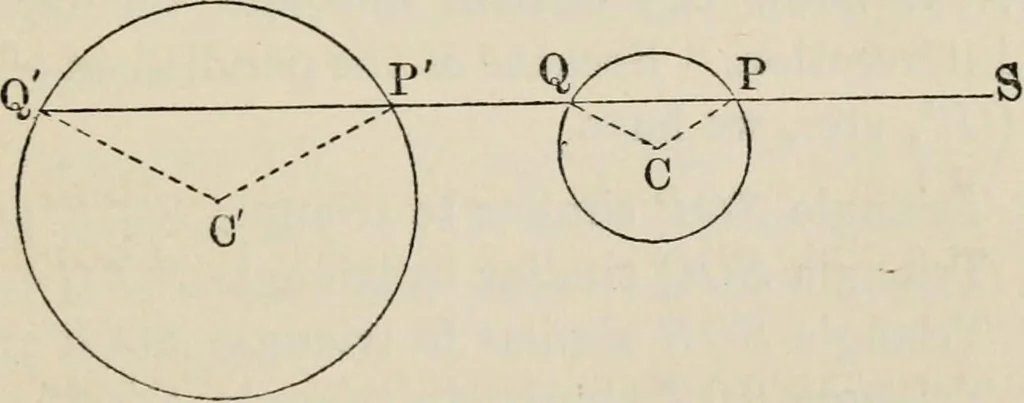
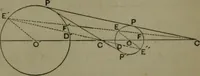
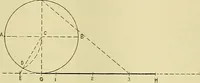
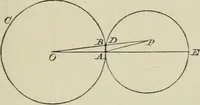
D. Remark 1. An independent proof of the theorem is ob-tained by drawing the radii from each centre of the pair ofcircles to the points in which the joining line intersects thecircumferences, and showing that the radii, taken two andtwo, are parallel. Remaek 2. The second part of the theorem is… … either of these points on one circle with either of the pointson the other circle we may form four pairs of points, as(P, P). {Q, Q)^ (ft n, and (P, Q). The pairs at thetermini of parallel radii, namely, (P, P) and (Q, Q), arecalled homologous points; those at the termini of non-parallel radii, as…
Geometry, Analytic
Internet Archive · California Digital Library · Public Domain Mark 1.0. Free to use for anything.