Elements of analytical geometry and the differential and integral calculus (1856)
Robinson, Horatio N. (Horatio Nelson), 1806-1867 · Cincinnati : J. Ernst · leaf 139
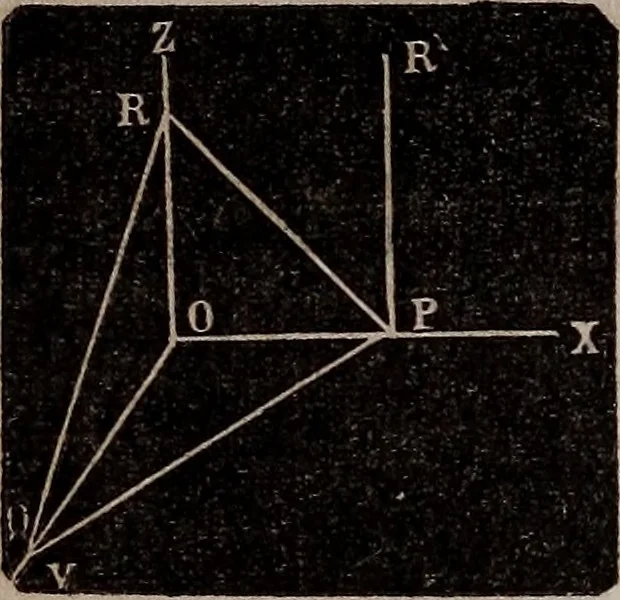
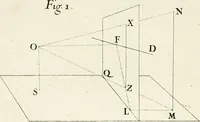
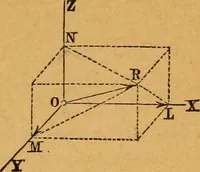
these values substituted in the equation ofthe plane, will give D=0 also. Therefore, when a plane passesthrough the origin of co-ordinates, the general equation for theplane reduces to 2d. To find the points in which theplane cuts the axes, we reason thus : The equation of the plane must re-spond… … Or :-^=0P, For the point Q we must take x=0 and g=0.And y- -i-- „-£,.0R. For the point JR, 3d. If we suppose the plane to be perpendicular to the planeXT, PR a trace in it may be drawn parallel to OZ, and theplane will meet the axis of Z at the distance infinity. That is, OR, or its equal (—_ )…
Geometry, Analytic · Calculus
Internet Archive · Library of Congress · Public Domain Mark 1.0. Free to use for anything.