Elements of analytical geometry and the differential and integral calculus (1856)
Robinson, Horatio N. (Horatio Nelson), 1806-1867 · Cincinnati : J. Ernst · leaf 230
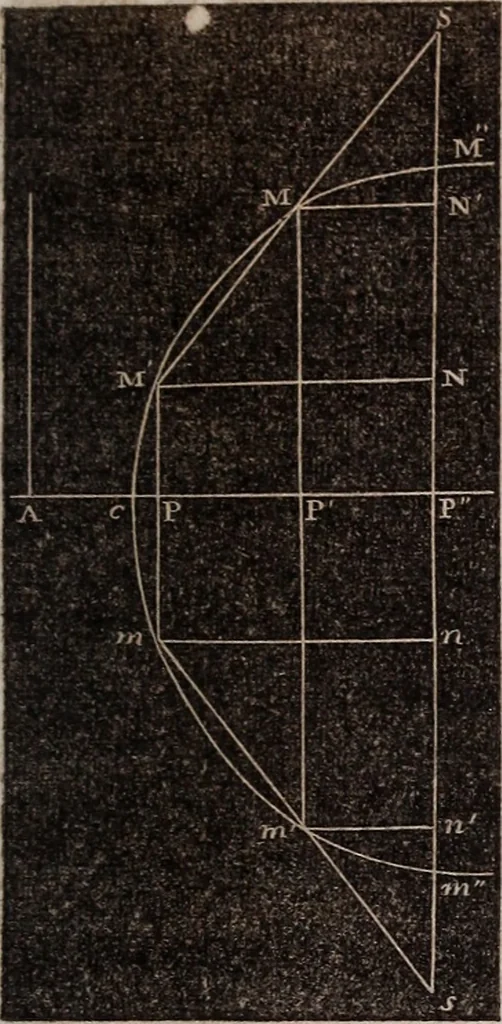
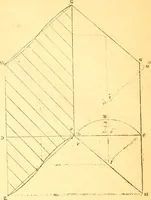
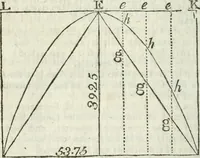
dmember numerically greater thanall the terms that followed, and aswe have its square, the sign cannotbe affe<;ted by the essential sign ofh, hence the second member of theequation is negative —which is alsoshown by the figure, the point Min the curve is below the line MS. But in this case the… … Hence, if a curve is concave towards the axis of abscissas the or-dinates and second differential coefficient will have contrary signs. For an example to apply this theory, let it be required todetermine whether the parabola is convex or concave towardsthe axis of abscissas. dx y c?^_ pdy ^ dx^…
Geometry, Analytic · Calculus
Internet Archive · Library of Congress · Public Domain Mark 1.0. Free to use for anything.