Elements of analytical geometry and the differential and integral calculus (1856)
Robinson, Horatio N. (Horatio Nelson), 1806-1867 · Cincinnati : J. Ernst · leaf 235
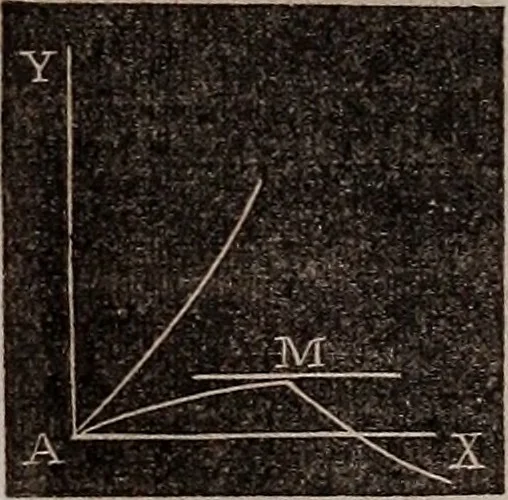
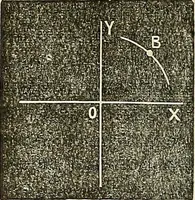
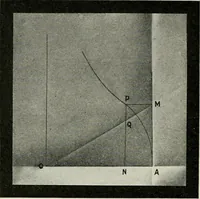
e the curve will pass through the origin.If X be negative, y will be imaginary^ because the equationswould then demand the square root of negative quantities whichhave no existence, hence no part of the curve is on the negativeside of the axis of Y. We also perceivethat for every positive value of… … 2:»±|a:2=0. THEORY OF CURVES. 227 Whence x=0, or a;=^f, indicating that the axis of X\s tan-gent to the curve at the origin, and the tangent to the lowerbranch must be parallel to that axis at a point whose abscissais H- The first value of -irj belongs to the upper branch of the curve, and it is…
Geometry, Analytic · Calculus
Internet Archive · Library of Congress · Public Domain Mark 1.0. Free to use for anything.