Elements of analytical geometry and the differential and integral calculus (1856)
Robinson, Horatio N. (Horatio Nelson), 1806-1867 · Cincinnati : J. Ernst · leaf 238
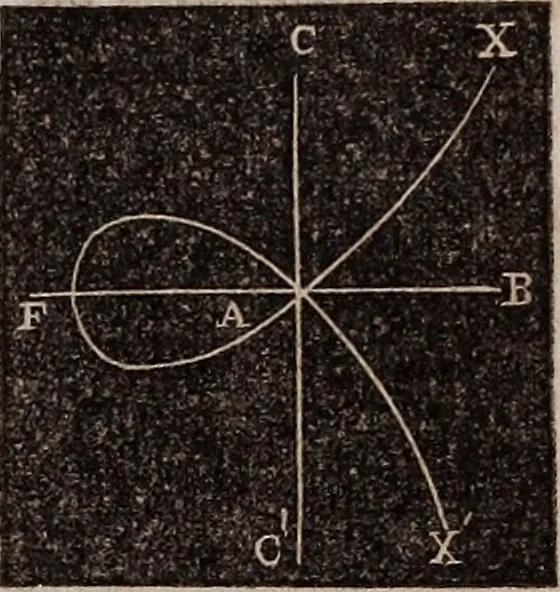
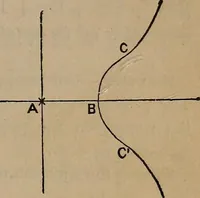
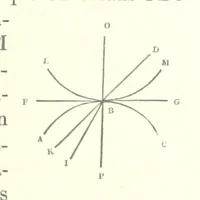
c, reduces — to infinity, hence at the three corresponding points, figure (6), at A, at E, and at JP, the tan-gent is perpendicular to the axis of X. Solving the equation 2>x^—2a;(6—c)—5c=0, will determinetwo real values for ar, and thus define the points at which thetangent will be parallel to… … y=zhj—^a are points of inflection. 2. The equation x*—3>^x^-\B:^j=0, represents a curve; hasthat curve any points of inflection? If so, designate them. Ans. It has points of inflection corresponding to each of the a __j ^T.„_„i. . 5a 76 points determined by making x=d=—-y and therefore l/=~ 230…
Geometry, Analytic · Calculus
Internet Archive · Library of Congress · Public Domain Mark 1.0. Free to use for anything.