Elements of analytical geometry and the differential and integral calculus (1856)
Robinson, Horatio N. (Horatio Nelson), 1806-1867 · Cincinnati : J. Ernst · leaf 244
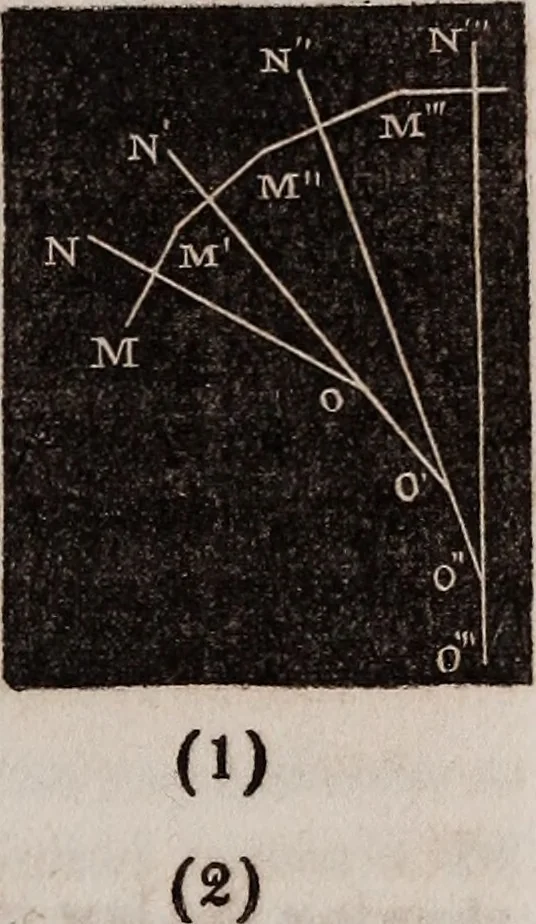
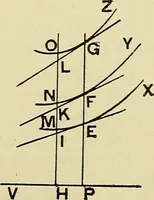
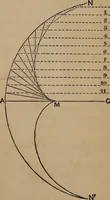
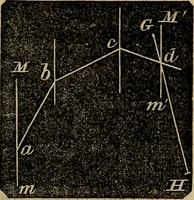
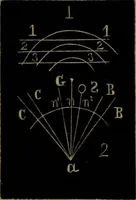
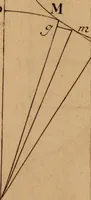
er andproperly connected, will form a second curve, which is called THE EVOLUTE CURVE. It is obvious from the figure, that thedifferences between two consecutive radii is0 0, 0 0, &c. that is, the difference betweenthe radii of curvature at any two points of theinvolute is equal to the space… … (3)(4) (S) And a=x-^(^^l+^ dx\ d^y The values of a and b correspond to the points 0, 0, 0\ andthus equations (4) and (5) will determine the evolute in anyparticular case. It is obvious in the last figure that the radius of curvature isnormal to the involute and tangent to the evolute. As an…
Geometry, Analytic · Calculus
Internet Archive · Library of Congress · Public Domain Mark 1.0. Free to use for anything.