Elements of analytical geometry and the differential and integral calculus (1856)
Robinson, Horatio N. (Horatio Nelson), 1806-1867 · Cincinnati : J. Ernst · leaf 255
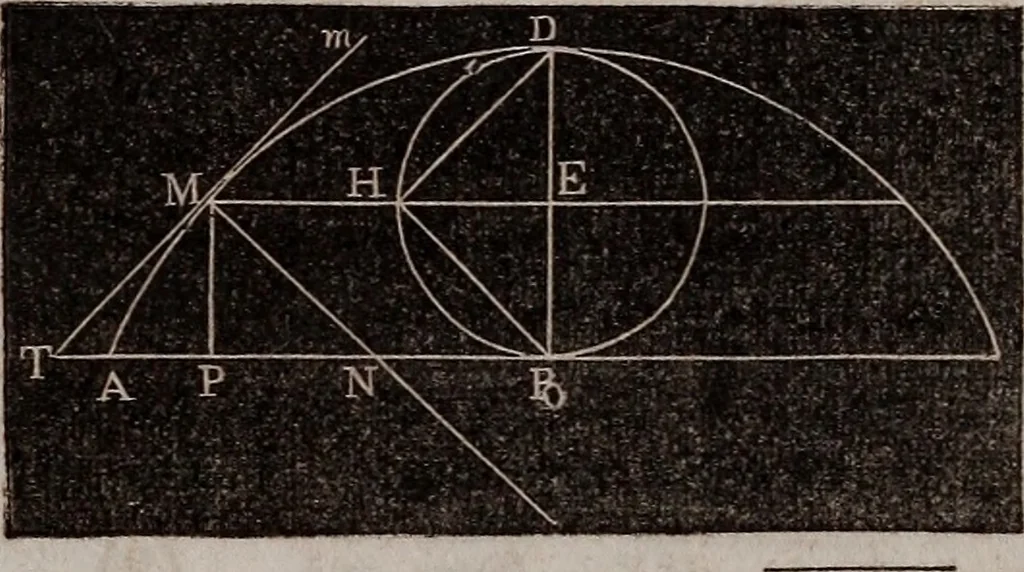
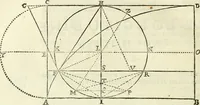
rve are most easilydeduced from its differential eqxmiion. To find the differential equation of this curve we will differ-entiate (1), which is x=^rz—sin. {rz).dx=^rdz—cos.{rz)dz. (3) But sm.(rz) = j2ry—y-. Whence eos,(rz)dz=Si:^^. (4) J2ry—y^ 246 DIFFERENTIAL CALCULUS. But COS.(rz) is OH, which is… … (Art. 49.) Now by the application of (Art.24), we can readilyfind expressions for thetangent, sub-tangent,normal, and sub-nor-mal of this curve The tan.^7=y^|!+l=y^^. 2r—y r Sub-tan. TF=l^-^=-. — . ^y J2ry—y^ Normal MN=^l- Jdx^+dy^ = J~^-dx ydy. Sub-normal PN=ilA=: J2ry—y^,dx These values being…
Geometry, Analytic · Calculus
Internet Archive · Library of Congress · Public Domain Mark 1.0. Free to use for anything.