Elements of analytical geometry and the differential and integral calculus (1856)
Robinson, Horatio N. (Horatio Nelson), 1806-1867 · Cincinnati : J. Ernst · leaf 48
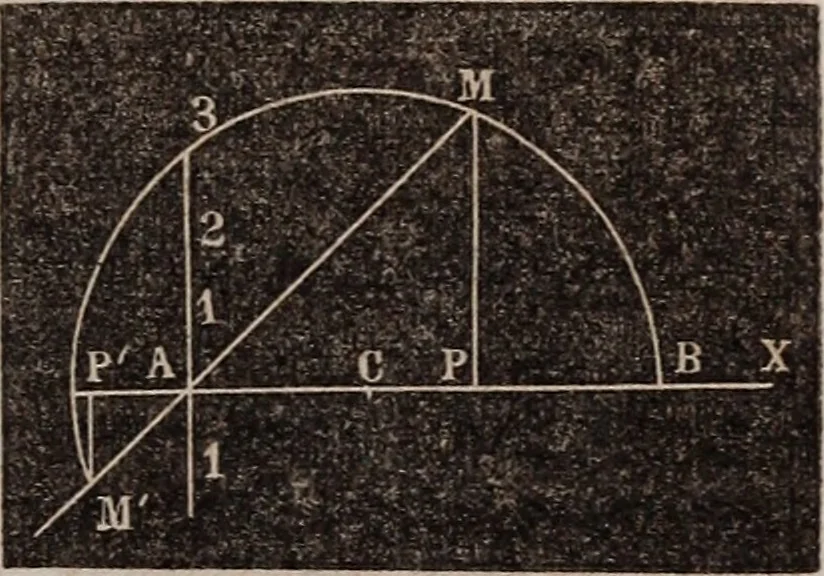
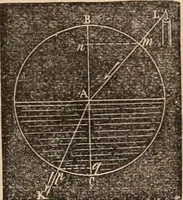
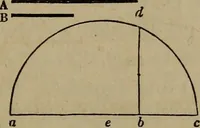
othe right of the point P. Because R=J\p^—q, R or -<4il/becomes less and less asthe numerical value of q approaches the value of \p^. Whenthese two are equal, i?=0, and the circle becomes a point.When q is greater than \p^, the circle has more than vanished,giving no real existence to any of… … THE CIRCLE. 39 It will be remembered that the equation of a straight linepassing through the origin of co-ordinates is y=ax, (1) and that the general equation of the circle is {xd^cY+{y±:hY=RK (2) If we make 6=0, the center of the circle must be somewhereon the axis of X. Let AM represent a line,…
Geometry, Analytic · Calculus
Internet Archive · Library of Congress · Public Domain Mark 1.0. Free to use for anything.