Young, Charles A. (Charles Augustus), 1834-1908, Young, Anne Sewell, b. 1871., ed · Boston, New York [etc.] Ginn and Company · leaf 295
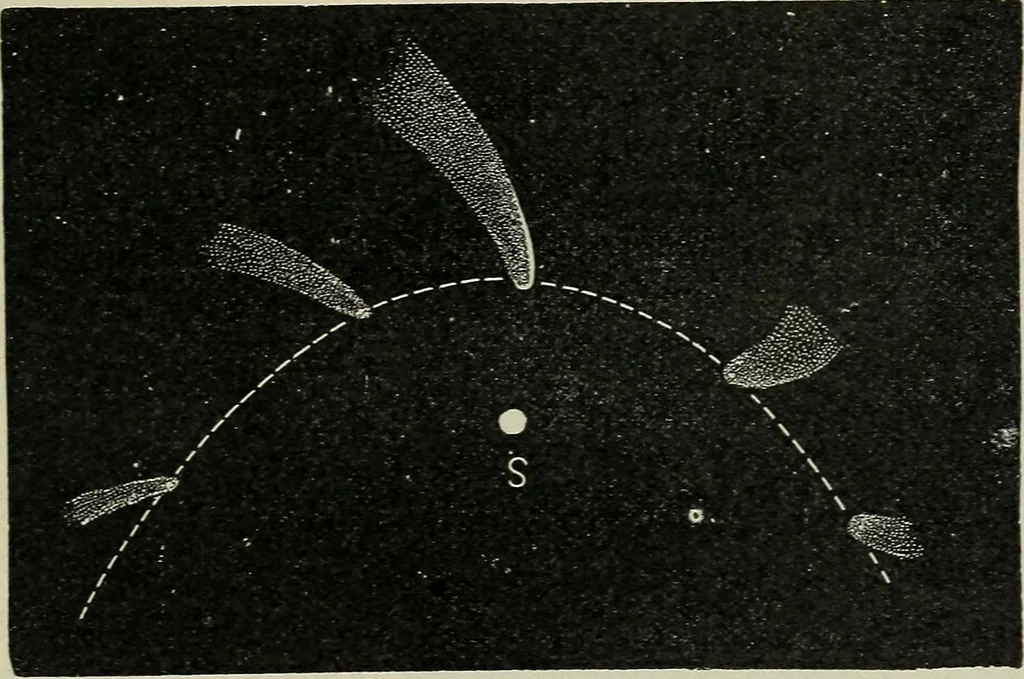
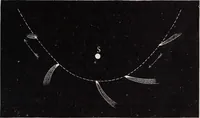
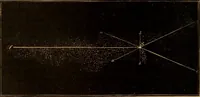
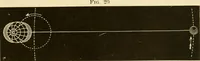
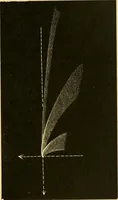
so that the particles leave the comet with a relativevelocity of four or five miles a second, which is afterwards continu-ally increased until it becomes enormous. The nearly straight raysshown in Fig. 89 belong to this type. For plausible reasons, con-nected with its low density, Bredichin… … YiG. 97. —A Comets Tail at Different Points in its Orbit near Perihelion. The second type is the curved plume-like train, like the principaltail of Donatis comet. In trains of this type, supposed to be due tohydrocarbon vapors, the repulsive force varies from 2.2 times the gravi-tational attraction…
Astronomy · Constellations
Internet Archive · Library of Congress · Public Domain Mark 1.0. Free to use for anything.