Elements of astronomy: accompanied with numerous illustrations, a colored representation of the solar, stellar, and nebular spectra, and celestial charts of the northern and the southern hemisphere (1875)
Lockyer, Norman, Sir, 1836-1920 · New York, D. Appleton and company · leaf 143
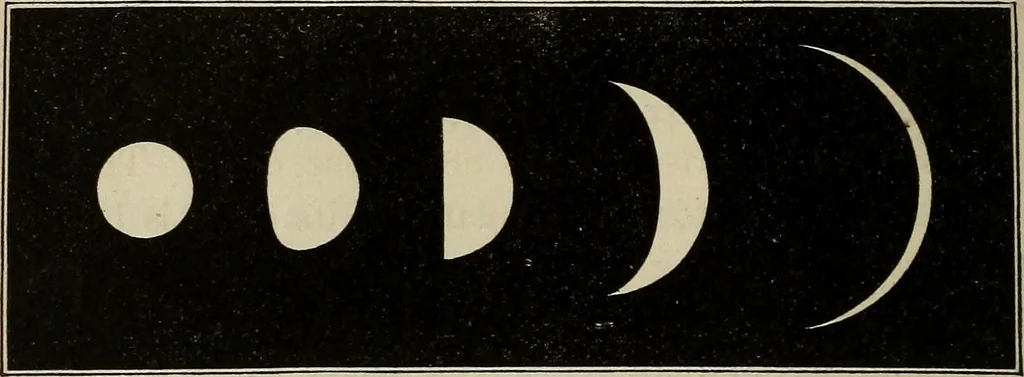
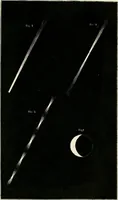
ame the Superior Planets. 257. Which is thenearest Planet to the Sun? At what times is Mercury visible? Why is it notvisible at other times ? What is its greatest distance in degrees from the Sun ? 136 THE INFEKIOK AND SUPEKIOK PLANETS. this is because we see more of its illuminated side at onetime… … Fig. 58.—Phases of Mercury, and its Comparative Size as seen atDifferent Times. 258. Mercurys orbit is more elongated than that ofany other of the principal planets; it differs so much froma circle that at perihelion the planet is more than 14 mill-ions of miles nearer the Sun than at aphelion. It…
Astronomy
Internet Archive · Library of Congress · Public Domain Mark 1.0. Free to use for anything.
![An illustration from Novae coelestium terrestriumq[ue] rerum observationes : et fortasse hactenus non uulgatae (1646)](https://img.insideoutlibrary.com/img/200/ia-novaecoelestiumt00font-104-43.webp)