Davies, Charles, 1798-1876 · New York and Chicago, A. S. Barnes and company · leaf 25
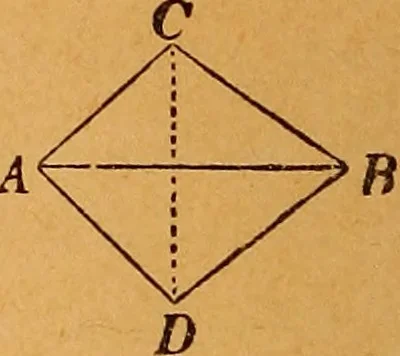
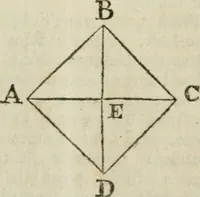
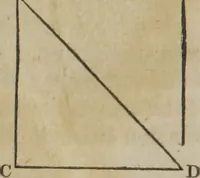
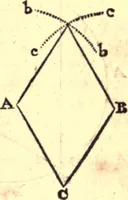
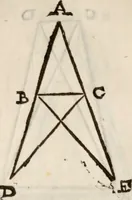
, theangle B to the angle B, and the angle Cto the angle D. For, suppose the triangles to be joinedby their longest equal sides A B, and theline CD to be drawn. Then, since the side A C is equal to AD, by hypothesis, thetriangle ADC will be isosceles; and therefore, the angle ACDwill be equal to… … ACD+BCD=ADC+BDCthat is, the angle ACB=ADB. Now, the two triangles ACB and ADBhave two sides and the included angle ofthe one equal to two sides and the in-cluded angle of the other, each to each: hence, the remainingangles will be equal (Th. iv): consequently, the angle CABis equal to BAD, and the…
Geometry · Plane trigonometry
Internet Archive · Library of Congress · Public Domain Mark 1.0. Free to use for anything.