The elements of natural philosophy : copiously illustrated by familiar experiments and containing descriptions of instruments, with directions for using : designed for the use of schools and academies (1856)
Sprague, A. W. (Alfred White), 1821-1891 · Boston : Phillips, Sampson & Company · leaf 148
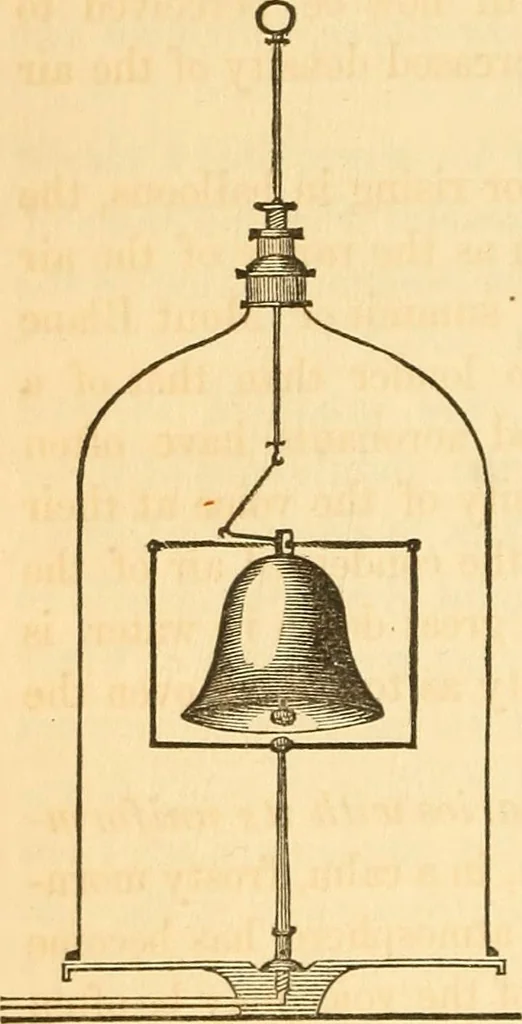
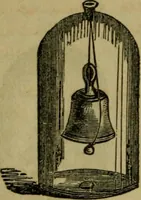
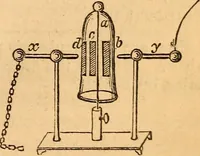
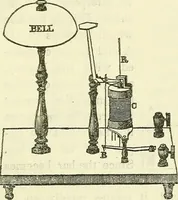
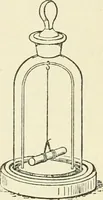
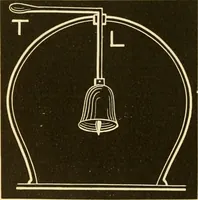
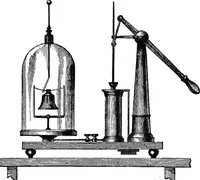
a dropof oil on the sliding-rod, and seeingthat the bell-glass is well fitted tothe plate (§ 66), ring the bell bymeans of the rod. The air, whichnow fills the receiver and surroundsthe bell, will serve as a medium fortransmitting its vibrations, and theringing will be clearly heard. Nowperfect a… … * Isos, equal ; chronos, time. How is a perfect sound or tone caused? How a mere noise? Give theexperiment of the Bell in vacuo. CAUSE OF SOUND. 143 admitting the air, the tone becomes louder and louder, mth theincreasing density of the surrounding air. Sound increases with the density of the air…
Physics
Internet Archive · Library of Congress · Public Domain Mark 1.0. Free to use for anything.
![An illustration from [Electric engineering.] (1902)](https://img.insideoutlibrary.com/img/200/ia-electricengineer03inte-455-280.webp)